

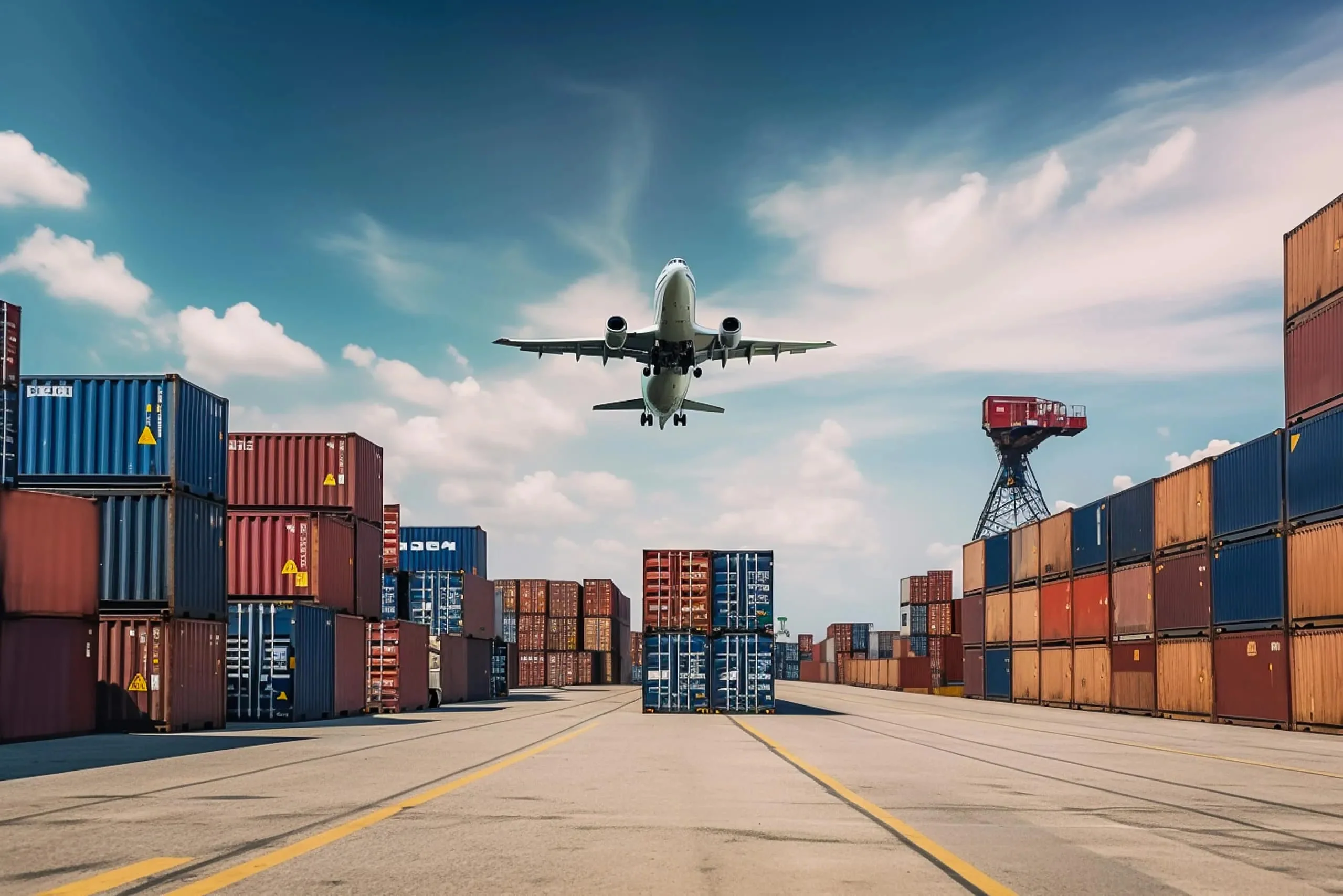

Shipping from USA to Turkmenistan: Air and Multimodal Freight
Freight from the United States to Turkmenistan requires a different routing approach from destinations with direct access to ocean shipping.
Turkmenistan borders the Caspian Sea, but the Caspian has no direct connection to the world’s oceans. A container shipped from the United States therefore has to use a third-country ocean gateway and continue by rail, truck, and, on some routes, a Caspian feeder or ferry before reaching Turkmenistan.
That makes multimodal transportation a normal part of ocean freight to the country rather than an optional final-delivery service.
Air freight follows a simpler international route and is commonly used for urgent spare parts, electronics, medical products, samples, and high-value cargo. Larger commercial loads, machinery, industrial equipment, construction materials, and palletized goods are more likely to move through a combination of ocean and inland transportation.
RAM International Shipping works as a freight forwarder. It does not operate the ocean vessels, aircraft, trains, or trucks used for the shipment. RAM arranges ocean freight with vessel-operating carriers as a licensed NVOCC and coordinates air transportation through airline agreements as an IATA-licensed agent.
How Ocean Freight from USA to Turkmenistan Actually Moves
Turkmenistan cannot be treated as a normal ocean port destination even though Turkmenbashi International Seaport handles container and ferry traffic on the Caspian Sea.
One practical multimodal corridor connects the Black Sea and Caspian Sea regions. Cargo can enter through Georgia, continue across Georgia and Azerbaijan by rail or road, reach the Port of Baku, and then cross the Caspian Sea to Turkmenbashi.
This is an established international transport corridor rather than a theoretical routing. In 2026, Turkmen and Georgian transport authorities were actively discussing closer integration of Poti and Turkmenbashi into East–West multimodal routes, while the ports of Baku and Turkmenbashi continue to cooperate on Caspian freight movements.
The Turkmenbashi–Baku connection also has dedicated container capability. Turkmenistan introduced a feeder container service on the Turkmenbashi–Baku–Turkmenbashi route, and current transport information continues to describe container movements between the two ports.
Turkmenbashi International Seaport has a container terminal designed for 400,000 TEU per year. The terminal connects directly with both road and railway transportation and has equipment for transferring containers between vessels, trucks, and rail wagons.
For a U.S. shipper, this means the quote needs to cover more than the first ocean bill of lading. The international route can involve ocean freight to the regional gateway, terminal handling, rail or road transit across the Caucasus, a Caspian crossing, customs procedures, and final delivery inside Turkmenistan.
FCL, LCL and Ground Freight to Ashgabat and Other Cities
FCL is normally used when the shipper needs the entire container for machinery, commercial inventory, industrial materials, multiple pallets, or other larger shipments.
LCL allows smaller commercial loads to share container space. It can reduce the cost of the ocean leg when there is not enough cargo for a full container, but Turkmenistan adds several handling stages beyond normal consolidation and deconsolidation.
The container may have to move between ocean, rail, truck, and Caspian transport during the journey. For fragile equipment or cargo that is sensitive to repeated handling, the routing and packaging need to be considered before choosing LCL solely because the shipment occupies less space.
Ground transportation is especially important for this destination.
Turkmenistan has rail and road connections linking Turkmenbashi with Ashgabat and other parts of the country, while international corridors connect the country with Azerbaijan, Kazakhstan, Uzbekistan, and Iran. Recent container-train projects also show Turkmenistan being used as an active rail component of East–West and North–South freight corridors.
After cargo enters Turkmenistan, trucking or rail can continue to Ashgabat, Mary, Turkmenabat, Balkanabat, Dashoguz, or another consignee location.
Standard dry containers work for many shipments. Oversized machinery may require a flat rack, open-top equipment, breakbulk handling, or another project-cargo solution. Dimensions and gross weight become important not only for the ocean booking but also for the rail wagons, trucks, terminals, and Caspian vessel used later in the route.
RAM coordinates these transport stages with the companies operating each leg rather than acting as the physical carrier itself.
Air Freight from USA to Turkmenistan via Ashgabat
For cargo that cannot accommodate a long multimodal route, air freight can remove several of the transfer points involved in ocean transportation.
Ashgabat International Airport is the country’s principal international air-cargo gateway. Its cargo terminal is designed to handle approximately 200,000 tonnes per year and covers more than 17,000 square meters. The facility has five aircraft stands, dedicated import and export areas, refrigerated rooms, warehouses, customs facilities, and handling systems for different types of cargo.
The terminal can handle general freight as well as perishables, valuable goods, medicines, agricultural cargo, livestock, and other commodities requiring dedicated storage.
Air freight from the United States can be appropriate for replacement parts, electronics, medical equipment, pharmaceuticals, industrial components, samples, and other goods tied to production or delivery deadlines.
There may not be a nonstop cargo service available for every U.S. origin. Depending on the airline and booking date, freight can move through an international connecting hub before reaching Ashgabat.
Airline charges are based largely on chargeable weight. Actual gross weight is compared with volumetric weight, so a large lightweight crate may be billed above its scale weight.
Piece dimensions also need to be checked early. Machinery components, long crates, dangerous goods, lithium batteries, pharmaceuticals, perishables, and temperature-controlled cargo can require special packaging, documentation, handling, or airline approval.
RAM coordinates the airline booking and supporting cargo services but does not operate the aircraft.
Turkmenistan Customs Clearance, Contract Registration and Certification
Customs preparation deserves more attention for Turkmenistan than it does for many simpler import markets.
Current official trade procedures state that import contracts generally have to be registered with the State Commodity and Raw Materials Exchange of Turkmenistan before customs clearance, unless the contract falls within a specific exemption. Amendments to a registered contract also need to be registered.
For import contracts exceeding $10,000, the Turkmenistan Trade Information Portal also states that the trader must obtain a transaction passport from its bank before customs clearance.
Commercial clearance can involve documents such as:
- registered import contract where applicable;
- commercial invoice and packing information;
- bill of lading or CMR for road transportation;
- customs declaration;
- certificate or declaration of origin where required;
- quality, conformity, sanitary, or other commodity-specific documentation.
Current import requirements also state that the contract should identify the goods, origin, currency, item price, and total price. Responsibility for customs clearance is determined by the contract, although the buyer commonly handles the import side.
Certification is another important part of the process. The official Turkmenistan Trade Information Portal states that importers of non-food products must obtain a certificate of conformity from Turkmenstandartlary. Food imports follow sanitary conformity procedures through the relevant state sanitary authority.
Turkmenstandartlary’s certification information also confirms that imported products subject to certification require supporting customs, contract, invoice, and quality documentation.
The Turkmenistan Trade Information Portal provides official step-by-step import procedures for different commodities.
Import Duties, Restricted Goods and Compliance Checks
Turkmenistan applies product-specific customs duties rather than one universal rate.
Current trade guidance states that many imported goods are subject to rates around 5–10%, while machinery, industrial equipment, and energy-related products can fall in lower bands, often around 0–5%. Some consumer goods and locally sensitive products carry higher duties.
The State Customs Service also publishes specific duty schedules for individual commodity codes, including both percentage-based and fixed-per-unit duties. Excise taxes apply separately to categories including alcoholic beverages, tobacco products, and passenger vehicles.
Turkmenistan’s standard VAT rate is 15%, although the actual tax treatment of an import depends on the transaction, importer, exemptions, and applicable tax rules.
The HS/commodity code should therefore be checked before quoting customs charges.
The State Customs Service of Turkmenistan provides customs-duty information, excise schedules, customs legislation, a tariff calculator, customs-broker information, and electronic services.
Some commodities also need government authorization before import. Current rules place controls on categories including arms and military equipment, explosives, radioactive materials, narcotics and psychotropic substances, certain dual-use goods, poisons, chemicals, animals, plants, cultural property, and religious literature.
Agricultural goods may require veterinary or phytosanitary controls, while radio electronics and high-frequency equipment can require additional approval.
For U.S.-origin cargo, export-control and sanctions screening should also be completed before the route is confirmed. A route that appears geographically shorter is not automatically suitable for U.S. cargo if it introduces a restricted transit country, party, or end use.
Shipping Cost and Transit Planning from USA to Turkmenistan
Turkmenistan is one of the destinations where a simple ocean rate can give a misleading picture of the complete transportation cost.
A quote can include U.S. pickup, export-port handling, international ocean freight, handling at the third-country gateway, rail or road transit, Caspian transportation, Turkmenistan customs services, and final delivery.
The U.S. origin makes a difference as well. Cargo starting near New York, Houston, Los Angeles, or another major gateway may enter the international leg quickly. Freight originating inland can require a substantial domestic truck or rail movement before export.
FCL and LCL pricing also behaves differently once several transport modes are involved. The lowest ocean freight rate is not always the lowest door-to-door rate if it creates extra transfers or a more expensive inland corridor.
Air freight is priced mainly around chargeable weight, shipment dimensions, airline capacity, connections, cargo type, and urgency.
RAM’s Freight Rate Calculator can be used with the actual shipment information.
Fixed transit-time promises are especially unreliable for a multimodal route to Turkmenistan. Ocean schedules, transshipment, rail availability, Caspian vessel connections, border processing, customs clearance, and final inland delivery can all affect the complete timeline. Published ocean and air estimates can be useful for planning, but they do not necessarily describe the same routing or service scope.
For a quote, provide the commodity, number of pallets or pieces, exact dimensions, gross weight, U.S. origin, final destination in Turkmenistan, and cargo-ready date. Machinery, dangerous goods, chemicals, pharmaceuticals, food products, electronics, oversized freight, and goods requiring certification may need additional information before the route is booked.
RAM coordinates the international carriers, multimodal connections, and supporting logistics as the freight forwarder rather than operating the vessels, aircraft, trains, or trucks used in the shipment.
Request a quote for shipping from the USA to Turkmenistan based on your cargo, origin, destination, and required delivery schedule.