Shipping from USA to Thailand: Ocean and Air Freight
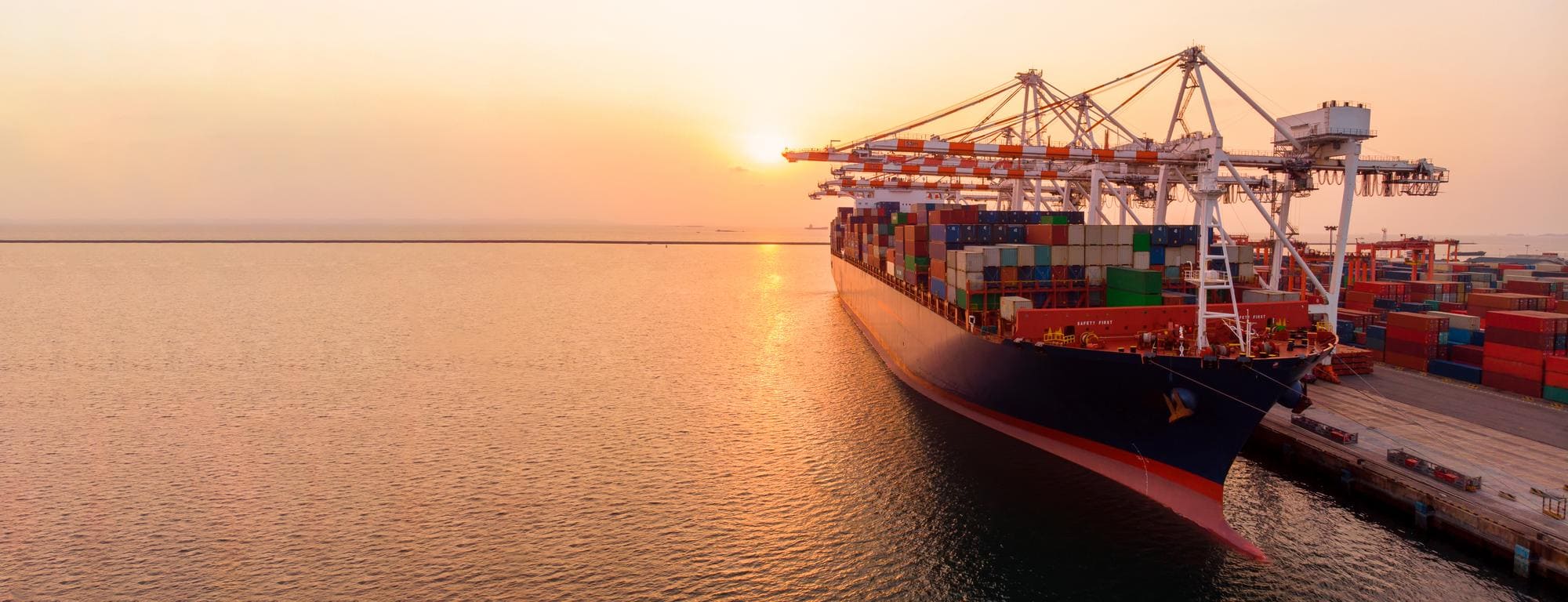
Commercial freight from the United States to Thailand normally moves by ocean or air. For larger shipments, Laem Chabang is the main deep-water gateway, while Bangkok Port remains an option for some containerized and general cargo. Air freight is centered primarily around Suvarnabhumi Airport.
The route starts on the U.S. side as well. Cargo near Los Angeles, Long Beach, Oakland, or Seattle can use Pacific gateways, while shipments originating in New York, Savannah, Houston, or an inland state may require a different ocean routing and additional domestic transportation before export. Freight services on the USA–Thailand lane vary according to origin geography, cargo size, urgency, and final destination rather than following one fixed route.
Ocean freight is commonly used for machinery, commercial inventory, industrial equipment, automotive components, raw materials, furniture, and palletized goods. Air freight is used more often for electronics, urgent spare parts, medical products, samples, production components, and higher-value cargo with shorter deadlines.
RAM International Shipping works as a freight forwarder rather than the vessel-operating carrier or airline. RAM arranges ocean freight with shipping lines as a licensed NVOCC and coordinates air cargo through airline agreements as an IATA-licensed agent.
Ocean Freight from USA to Thailand Through Laem Chabang and Bangkok Port
Laem Chabang Port in Chon Buri is Thailand’s main deep-water port for international shipping. It handles container vessels as well as RoRo, general cargo, and other commercial traffic, and it is closely connected with Thailand’s Eastern Economic Corridor and major industrial areas. Thai government information describes Laem Chabang as the country’s main international deep-sea gateway.
The port’s current container capacity is about 11.1 million TEU per year. Phase 3 development is underway to expand capacity toward 18 million TEU per year and increase rail use for cargo moving to and from the port. In July 2026, the Port Authority of Thailand reported that the marine construction portion of Phase 3 was more than 98% complete, while other terminal and infrastructure works were still in progress.
Bangkok Port, also known as Khlong Toei Port, is located on the Chao Phraya River and remains another commercial gateway. It is smaller and has vessel-size and draft limitations that do not apply in the same way at Laem Chabang. For cargo going directly into Bangkok and nearby areas, however, it can still be relevant depending on the carrier and service.
For containerized ocean cargo, shippers usually compare FCL and LCL.
Full Container Load gives one shipper use of the complete container and is commonly used for machinery, several pallets, industrial materials, or larger volumes of commercial goods.
Less than Container Load allows several customers to share container space. It can be practical for smaller commercial shipments, but consolidation and deconsolidation create additional handling stages.
Cargo that cannot fit standard dry equipment may need a flat rack, open-top container, breakbulk service, or another project-cargo arrangement. Reefer containers can be used for products requiring controlled temperature.
RAM coordinates these bookings with the vessel-operating carrier and can also arrange packing, crating, consolidation, warehousing, transloading, and U.S. inland transportation where required.
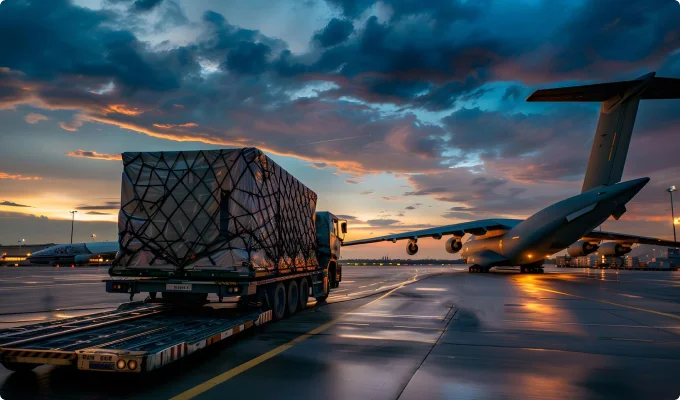
Air Freight from USA to Thailand via Suvarnabhumi Airport
Suvarnabhumi Airport is Thailand’s principal international air-cargo gateway.
Airports of Thailand currently lists Suvarnabhumi’s cargo-handling capacity at approximately 1.7 million tonnes per year. In 2025, cargo volume at the airport was approximately 1.49 million tonnes. The airport serves a large network of international passenger and cargo airlines and supports freight moving into Bangkok as well as industrial areas across central and eastern Thailand.
Air freight is commonly selected for electronics, industrial components, replacement parts, medical equipment, pharmaceuticals, samples, and commercial goods that cannot wait for an ocean schedule.
The freight rate is based heavily on chargeable weight. Airlines compare actual gross weight with volumetric weight, which means that a large but lightweight crate may be billed above its scale weight.
Piece dimensions are just as important. Machinery parts, long crates, lithium batteries, dangerous goods, pharmaceuticals, perishables, and temperature-sensitive products may require specific packaging, documentation, handling, or airline approval.
Some U.S.–Thailand cargo moves directly, while other bookings connect through another Asian cargo hub. The complete schedule therefore depends on the departure airport, airline, connection, service level, and cargo-ready date.
RAM arranges air transportation through airline agreements rather than operating aircraft itself.
Thailand Customs Clearance, Import Duties and 7% VAT
Commercial imports into Thailand are handled through the country’s electronic customs system. Importers must register for customs procedures, and controlled goods require the appropriate permit before importation. Thai Customs also provides electronic tariff and licensing resources for checking product classifications and controlled goods.
Standard commercial clearance can require:
- Customs Import Entry;
- commercial invoice;
- packing list;
- bill of lading or air waybill;
- import license or permit where required;
- certificate of origin or other supporting documents where applicable.
Additional authorization can apply to food, pharmaceuticals, medical devices, cosmetics, hazardous substances, animals, agricultural products, industrial goods, and other controlled categories.
Thailand uses the ASEAN Harmonized Tariff Nomenclature (AHTN) 2022, based on HS 2022. Customs duties vary according to classification. Current applied ad valorem rates range from 0% to 80%, although many normal commercial products fall well below the upper end of that range. Thailand and the United States do not have a bilateral free trade agreement that provides general preferential tariff treatment for U.S.-origin goods.
The HS code should therefore be confirmed before estimating import taxes.
Official tariff information can be checked through Thai Customs — Customs Tariff Service.
Thailand also applies 7% VAT to imported goods. The Revenue Department states that import VAT is collected by Customs when goods are imported. The tax base generally includes the CIF value plus import duty, excise tax where applicable, and certain other taxes or fees.
Excise tax can apply separately to products such as motor vehicles, alcohol, tobacco, petroleum products, and certain other categories.
Import Licenses and Regulated Goods in Thailand
Not every product can be shipped to Thailand based only on a commercial invoice and transport document.
Import licensing applies to various categories, including certain agricultural goods, industrial products, pharmaceuticals, food, chemicals, defense products, and other controlled commodities. The authority responsible for approval depends on the product.
The Thai Food and Drug Administration is particularly relevant to commercial shipments of food, pharmaceuticals, medical devices, cosmetics, household hazardous substances, and related health products.
For example, a business importing food for sale must obtain the appropriate Thai FDA food import license. The importer must be a person or legal entity with commercial registration and a place of business in Thailand. Depending on the food category, product licensing or registration and a License per Invoice may also be required.
Medical-device importers must also register the importing establishment and complete the applicable product-registration process before commercially importing regulated devices. Thailand uses a four-class risk-based system aligned with the ASEAN Medical Device Directive.
Official information for regulated health products is available from the Thai Food and Drug Administration.
Some goods are prohibited rather than simply licensed. Current rules identify categories including used motorcycles and parts, certain refurbished medical devices, gaming machines, and specific products involving prohibited substances or environmental controls.
The importer should check the HS classification and current permit status before the cargo leaves the United States. An ocean carrier or airline accepting the shipment does not mean that the goods automatically meet Thailand’s import requirements.
Shipping Cost, Transit Time and Delivery Inside Thailand
USA-to-Thailand freight rates depend heavily on the U.S. starting point.
Cargo already located near Los Angeles or Long Beach can reach the Pacific export gateway with relatively little inland movement. Freight starting in Chicago, Dallas, Atlanta, or another inland city can require a truck or rail leg before the international shipment even begins. East Coast and Gulf cargo can follow a substantially different ocean route.
Transit estimates also vary according to U.S. origin, destination, transport mode, and route rather than one countrywide figure. West Coast ocean services are usually the most direct U.S. option, while East Coast or inland origins add either longer vessel routing or domestic transport before export.
Ocean freight pricing changes according to FCL or LCL service, container type, cargo volume and weight, U.S. export gateway, Laem Chabang or Bangkok destination, carrier routing, and specialized equipment.
Air freight depends more heavily on chargeable weight, dimensions, airport pair, airline capacity, cargo type, and urgency.
RAM’s Freight Rate Calculator can be used with the actual cargo and route details.
The international rate may not include every expense connected with the shipment. U.S. pickup, packing, crating, warehouse handling, terminal charges, insurance, customs brokerage, Thai import duty, VAT, excise tax where applicable, inspections, permits, storage, and final delivery may be separate items.
The destination inside Thailand should also be included when requesting a rate. Cargo arriving at Laem Chabang may still require trucking to Bangkok, Chon Buri, Rayong, Ayutthaya, Chiang Mai, or another manufacturing, warehouse, or consignee location.
RAM coordinates these carrier bookings and supporting logistics as the freight forwarder rather than operating the vessel, aircraft, rail service, or truck itself.
For a quote, provide the commodity, number of pieces or pallets, exact dimensions, gross weight, U.S. origin, final destination in Thailand, and cargo-ready date. Machinery, batteries, dangerous goods, food products, pharmaceuticals, medical devices, chemicals, refrigerated cargo, and oversized freight may require additional information before booking.
Request a quote for shipping from the USA to Thailand based on your cargo, origin, destination, and required delivery schedule.