Shipping from USA to Taiwan: Ocean and Air Freight
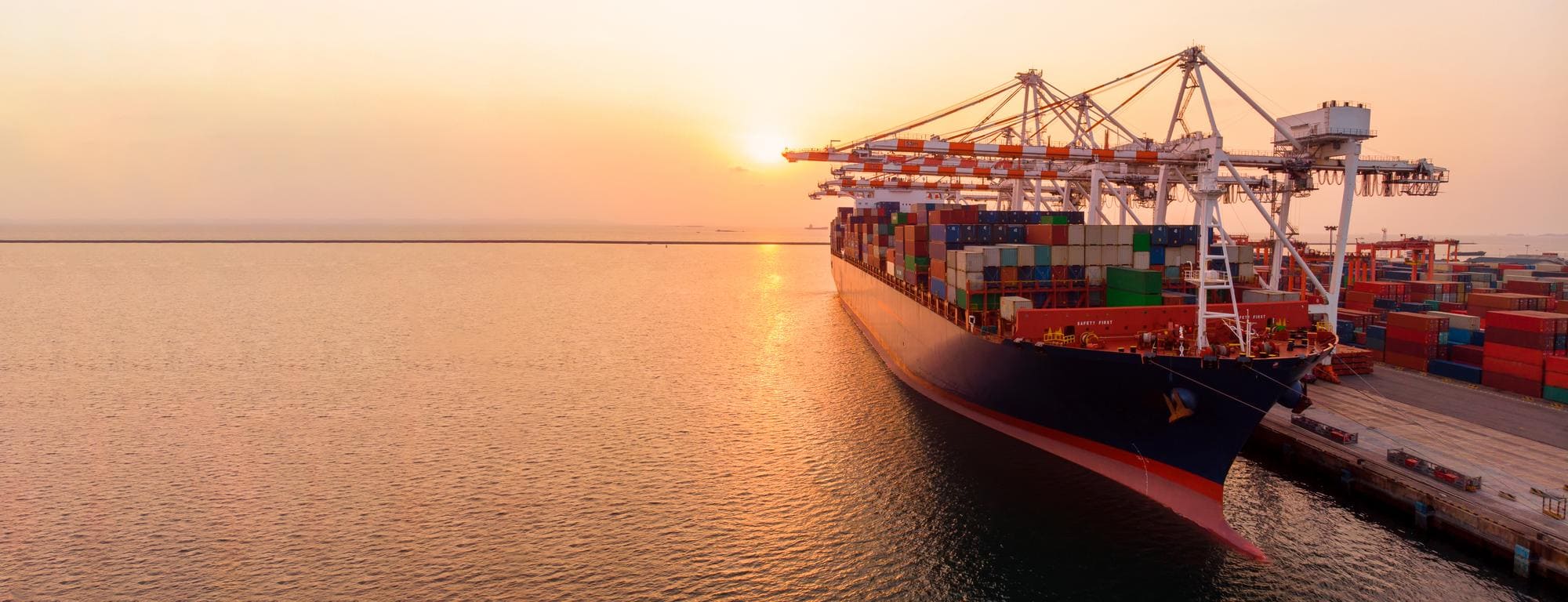
Shipping freight from the United States to Taiwan usually comes down to ocean freight for larger commercial loads and air freight for cargo where time matters more than transportation cost.
Taiwan has several international seaports rather than one gateway that works equally well for every shipment. Kaohsiung handles the largest container volumes, while Keelung is well positioned for northern Taiwan and Taichung serves the central part of the island. For air cargo, Taiwan Taoyuan International Airport is the main international gateway.
That makes the final delivery address important from the beginning. Cargo going to Taipei or New Taipei may be routed differently from machinery destined for Kaohsiung, a factory in Taichung, or a technology company in Hsinchu.
Ocean freight is commonly used for machinery, industrial equipment, commercial inventory, automotive components, raw materials, and palletized goods. Air freight is frequently used for electronics, semiconductor-related equipment and components, replacement parts, medical products, samples, and other higher-value or time-sensitive cargo.
RAM International Shipping works as a freight forwarder rather than the vessel-operating carrier or airline. RAM arranges ocean transportation with shipping lines as a licensed NVOCC and coordinates air cargo through airline agreements as an IATA-licensed agent.
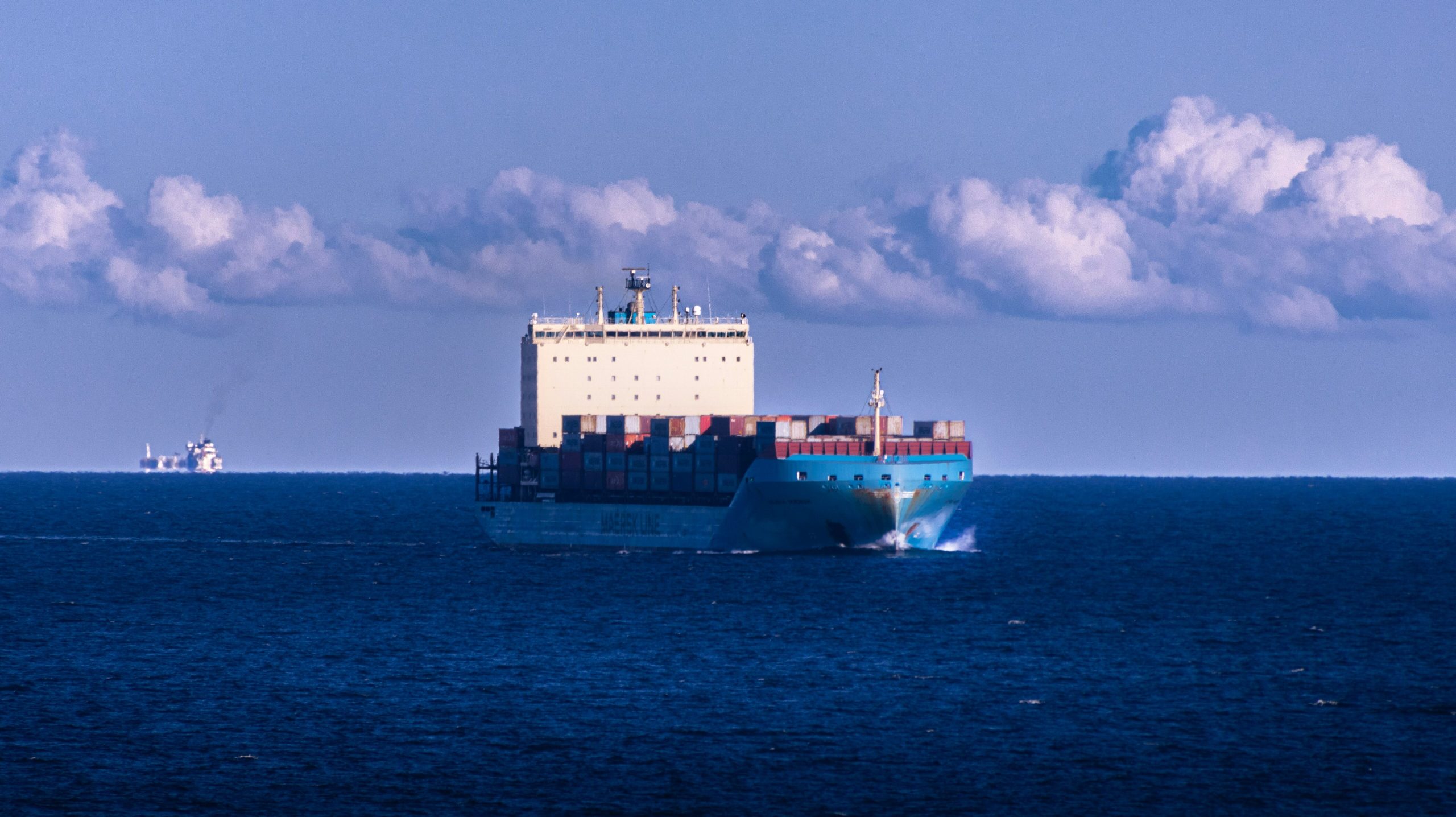
Ocean Freight from USA to Taiwan Through Kaohsiung, Keelung and Taichung
Kaohsiung is Taiwan’s largest container port and the main ocean gateway for a large share of international container traffic.
Taiwan International Ports Corporation recorded approximately 8.89 million TEU at Kaohsiung in 2025. The port handles containers alongside bulk, general, industrial, and other cargo and is especially relevant for shipments going to southern Taiwan.
Keelung provides another established container gateway in northern Taiwan. It handled approximately 1.60 million TEU in 2025. Its location can make it practical for cargo going to Taipei, New Taipei, and surrounding areas, depending on the carrier service and inland delivery requirements.
Taichung sits between the two and serves central Taiwan. The port handled about 1.59 million TEU in 2025, making it another realistic option for containerized freight rather than simply routing every shipment through Kaohsiung.
The choice of port should therefore consider the vessel schedule together with the consignee location. A cheaper port-to-port rate does not necessarily produce the lowest total transportation cost if the container then needs a long inland move.
For standard ocean freight, shippers normally compare Full Container Load and Less than Container Load.
FCL gives one shipper use of the complete container and is commonly used for larger commercial shipments, machinery, multiple pallets, and cargo where reducing individual handling is useful.
LCL allows smaller shipments to share a container. It can work well for several pallets or crates, although consolidation before departure and deconsolidation after arrival add handling stages and can extend the complete schedule.
Equipment that cannot fit into a standard dry container may require a flat rack, open-top container, breakbulk service, or another project-cargo arrangement. Temperature-controlled products may require reefer equipment.
RAM coordinates these services with the vessel-operating carrier and can also arrange packing, crating, warehousing, consolidation, transloading, and inland transportation in the United States where required.
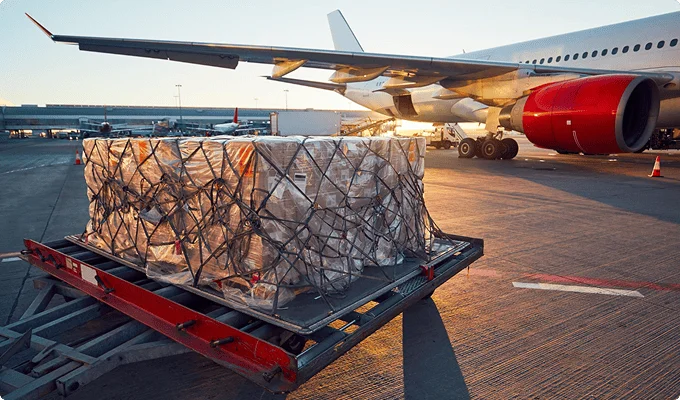
Air Freight from USA to Taiwan via Taoyuan International Airport
Taiwan Taoyuan International Airport is the country’s principal international air-cargo gateway.
The airport handled approximately 2.26 million metric tons of cargo in 2024, up 7.59% from 2023. Its official annual report also placed Taoyuan tenth globally by cargo volume for that year. Electronics, high-end manufacturing, AI-related products, and cross-border e-commerce contributed to cargo demand.
Air freight on the U.S.–Taiwan trade lane is frequently used for electronics, semiconductor components and equipment, production parts, medical products, pharmaceuticals, urgent spare parts, samples, and high-value commercial goods.
Major U.S. gateways can include Los Angeles, San Francisco, Chicago, New York, Dallas/Fort Worth, and other airports depending on where the shipment originates and which airline schedule is available. Current market listings show both direct and connecting options into Taoyuan.
Air freight rates depend heavily on chargeable weight. Airlines compare actual gross weight with volumetric weight, meaning that a large lightweight crate can be billed at a higher weight than its scale weight.
Individual dimensions matter as well. Semiconductor equipment, machinery parts, long crates, lithium batteries, dangerous goods, pharmaceuticals, perishables, and temperature-sensitive products can require additional packaging, documentation, handling, or airline approval.
RAM arranges these bookings through airline agreements rather than operating aircraft itself. Depending on the cargo, the shipment can move as standard air freight, consolidation, priority service, charter cargo, or another specialized arrangement.
Taiwan Customs Clearance, CCC Codes and Import Tax
Most commodities can be imported into Taiwan without a specific import permit, although controlled products remain subject to licensing or approvals. Commercial cargo still requires the appropriate customs declaration and supporting documentation.
Taiwan Customs allows import declarations to be transmitted electronically. Official customs guidance identifies the commercial invoice and packing list among the principal documents, with a bill of lading or air waybill, import license, certificate of origin, product information, or other documents required depending on the shipment.
Typical commercial documentation can include:
- commercial invoice;
- packing list;
- bill of lading or air waybill;
- import permit where the commodity requires one;
- certificate of origin where required;
- inspection, quarantine, certification, or other product-specific documentation.
Official clearance information is available through Taiwan Customs — Import Cargo Clearance.
Taiwan uses CCC Codes for tariff classification. These are based on the Harmonized System, and the applicable code determines the customs-duty rate and can also indicate whether the commodity is subject to another import requirement.
Duty should be checked against the actual classification rather than estimated from a general average. Taiwan’s current customs tariff uses different rate columns depending on origin and applicable trade treatment.
Imported goods are also generally subject to 5% business tax, which functions similarly to import VAT. Taiwan Customs states that the tax is calculated from the duty-paid value plus import duty and, where applicable, commodity tax, tobacco and alcohol tax, and related surcharges.
The customs value of general imported goods is based on transaction-value rules. Freight, insurance, and other elements relevant to the customs valuation need to be declared correctly.
Product Inspection, Chinese Labeling and Restricted Imports in Taiwan
Customs clearance does not necessarily mean the product is ready for sale in Taiwan.
Some industrial and consumer products fall under inspection or certification administered by the Bureau of Standards, Metrology and Inspection (BSMI). Depending on the product, compliance can involve Registration of Product Certification, batch-by-batch inspection, Declaration of Conformity, testing, or another inspection procedure. Products subject to mandatory inspection must satisfy the applicable requirements before they can be placed on the market.
BSMI requirements are particularly relevant to certain electrical, electronic, mechanical, and consumer products. The importer should check the specific CCC code rather than assume that all electronics follow one certification process.
Official certification information can be checked through BSMI — Product Certification.
Labeling is another area that should be reviewed before a commercial shipment is released for sale. Taiwan’s Commodity Labeling Act generally requires products sold in Taiwan to carry information in Chinese. Depending on the commodity, this can include the product name, manufacturer or producer details, country of origin, importer information, composition or major materials, quantity, and other required information.
Food, pharmaceuticals, medical devices, agricultural products, plants, and animals can involve other Taiwanese authorities and additional inspection or quarantine procedures.
Taiwan also maintains prohibited and conditionally importable product categories. Most commodity categories can be imported without special controls, but products connected with public sanitation, national defense, agriculture, environmental rules, and other regulated areas can require approval.
For regulated cargo, the importer should check the commodity classification, permit status, certification, and labeling before the shipment leaves the United States. Carrier acceptance does not confirm that the goods meet Taiwan’s import or market-access requirements.
Shipping Cost and Transit Time from USA to Taiwan
The cost of shipping to Taiwan depends heavily on where the cargo begins in the United States.
West Coast cargo can often move through Los Angeles, Long Beach, Oakland, Seattle, or Tacoma. Freight starting in Chicago, Dallas, Atlanta, or another inland location may first need trucking or rail transportation to an export gateway. East Coast and Gulf Coast cargo can follow longer ocean routings.
Current competitors serving the route put particular emphasis on USA-to-Taiwan rates and transit times. Published estimates commonly place West Coast FCL service to Kaohsiung or Keelung at roughly two to three weeks port-to-port, while East Coast and Gulf routes can take substantially longer. LCL adds consolidation and deconsolidation time. These figures are useful for planning, not as guaranteed schedules.
For ocean freight, pricing changes according to U.S. origin, export port, Taiwan destination, FCL or LCL service, container type, cargo volume and weight, carrier routing, and equipment requirements.
Air freight responds more heavily to chargeable weight, dimensions, departure airport, airline capacity, commodity, and service priority. Current market listings from U.S. airports to Taoyuan also show that schedules and rates vary significantly by origin and booking date.
RAM’s Freight Rate Calculator can be used with the actual shipment details.
The international transportation charge may not include every expense connected with the shipment. U.S. pickup, packing, crating, warehouse handling, terminal charges, insurance, customs brokerage, duties, 5% business tax, inspections, certification, storage, and final delivery in Taiwan may be separate costs.
The final delivery point should be included when requesting a quote. Cargo arriving in Kaohsiung, Keelung, or Taichung may still need trucking to Taipei, Hsinchu, Tainan, Taoyuan, or another manufacturing or distribution location.
RAM coordinates the carrier booking and the supporting logistics as the freight forwarder rather than operating the vessel, aircraft, or truck itself.
For an accurate quote, provide the commodity, number of pallets or pieces, exact dimensions, gross weight, U.S. origin, final destination in Taiwan, and cargo-ready date. Machinery, batteries, dangerous goods, electronics subject to inspection, food, pharmaceuticals, medical products, and oversized freight can require additional information before booking.
Request a quote for shipping from the USA to Taiwan based on your cargo, origin, destination, and required delivery schedule.