

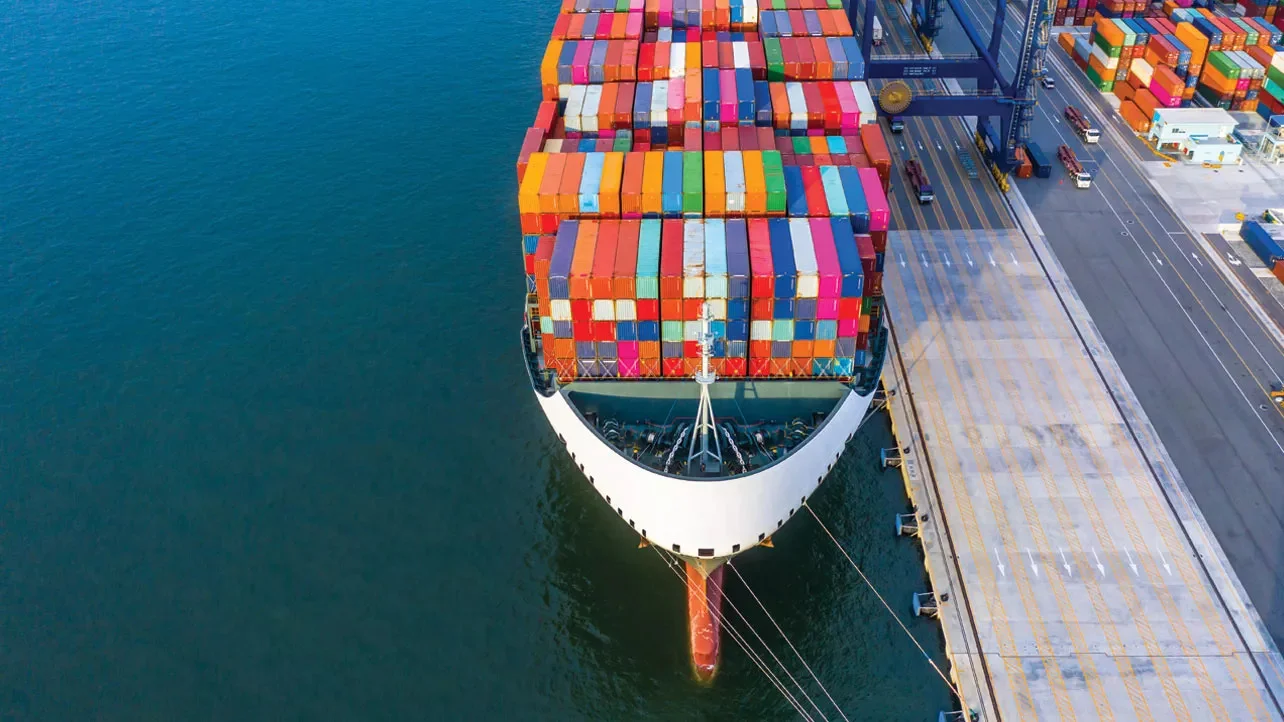
Shipping from USA to Pakistan: Ocean and Air Freight
Commercial freight from the United States to Pakistan usually moves by ocean through Karachi or Port Qasim, or by air through one of the country’s international cargo gateways.
Ocean freight is commonly used for machinery, commercial inventory, industrial equipment, raw materials, palletized goods, and other larger shipments. Air freight is used when cargo has a tighter delivery schedule, including replacement parts, electronics, medical products, samples, and high-value components.
Current freight companies serving the USA–Pakistan lane focus heavily on FCL, LCL, air freight, machinery, containers, and cargo moving through Karachi and Port Qasim. Rates and transit times vary substantially according to the U.S. origin and Pakistani destination.
RAM International Shipping works as a freight forwarder rather than the vessel-operating carrier or airline. For ocean freight, RAM acts as a licensed NVOCC and coordinates bookings with ocean carriers. For air cargo, RAM works as an IATA-licensed agent and arranges transportation through airline agreements.
Shipping from USA to Pakistan Through Karachi and Port Qasim
Karachi is Pakistan’s principal maritime center and one of the first gateways to compare for U.S. ocean freight.
Karachi Port handles container vessels, tankers, bulk carriers, and general cargo ships. Karachi Port Trust currently lists container operations including Karachi International Container Terminal, South Asia Pakistan Terminal, and Karachi Gateway Terminal. The port also has road and rail connections for cargo storage, clearance, and onward movement.
Port Qasim is located in the Karachi area but has a different mix of terminals and industrial facilities. Port Qasim Authority currently reports 18 berths and annual handling capacity of about 89 million tonnes. Cargo handled there includes containers, vehicles, machinery, project cargo, petroleum products, chemicals, bulk commodities, and LNG.
Its container infrastructure includes Qasim International Container Terminal facilities, while the multipurpose berths can handle machinery, vehicles, bulk and general cargo.
The destination port should be selected according to the carrier schedule, cargo type, equipment, and final delivery point rather than by port name alone.
Cargo for Karachi may require only a relatively short movement after release. Freight intended for Lahore, Faisalabad, Islamabad, Rawalpindi, Multan, Peshawar, or another inland destination still needs domestic transportation after customs clearance.
That inland portion can materially affect the complete cost, particularly for containers, heavy machinery, and oversized cargo. Port-to-port pricing should therefore not be treated as the full cost of moving freight to an inland Pakistani city.
Pakistan Customs, Single Declaration and Import Documents
Pakistan handles a large part of its trade documentation electronically.
The Pakistan Single Window (PSW) provides a Single Declaration service for imports. Authorized users can file an import declaration through one interface, submit supporting documents, add financial-instrument and commodity information, and route required information electronically to the government agencies responsible for the shipment.
Official information on the process is available through Pakistan Single Window — Single Declaration for Imports.
Pakistan Customs also continues to maintain customs-user registration through WeBOC. Users who need access to the online customs portal must register with the Federal Board of Revenue and obtain the appropriate WeBOC credentials.
For commercial imports, the documentation can include:
- bill of lading or air waybill;
- commercial invoice;
- packing list;
- certificate of origin;
- letter of credit documentation where applicable;
- insurance certificate;
- permits, certificates, or approvals required for regulated goods.
Product classification should be confirmed before shipment. Pakistan Customs uses PCT codes, based on the Harmonized System, with eight-digit classifications used for customs purposes.
The correct PCT code affects customs duty and can also determine whether additional customs duty, regulatory duty, sales tax, permits, or other product-specific requirements apply.
FCL, LCL and Specialized Ocean Freight to Pakistan
Full Container Load gives one shipper use of the complete container. It is commonly used for commercial inventory, multiple pallets, machinery, industrial materials, and other larger loads.
Less than Container Load allows several customers to share container space. It can be useful for a shipment that is too large for parcel or air service but does not require a complete container.
LCL involves more handling. Cargo must be consolidated before the ocean movement and separated after arrival, so the total schedule can be longer than an equivalent FCL routing.
Competitors currently serving USA-to-Pakistan freight searches commonly offer both FCL and LCL through Karachi and Port Qasim. Published market examples also show substantial differences in transit time between U.S. origins such as New York, Miami, Houston, Chicago, and Los Angeles.
Standard dry containers cover many commercial shipments, but machinery and oversized equipment may need another setup.
Depending on dimensions and loading requirements, cargo may require a flat rack, open-top container, breakbulk arrangement, or project-cargo service. Port Qasim’s cargo facilities handle machinery, equipment, vehicles, and project cargo through its multipurpose operations.
RAM coordinates these shipments with vessel-operating carriers. Packing, crating, warehousing, consolidation, and transloading can also be arranged where the shipment requires preparation before export.
For machinery, exact length, width, height, gross weight, and loading condition should be provided before equipment is selected.
Air Freight from USA to Pakistan
Air freight is used when an ocean schedule would take too long for the shipment.
Jinnah International Airport in Karachi has dedicated cargo operations, including an Export Cargo Terminal and Air Freight Unit. The export cargo operation runs around the clock.
Pakistan has also continued work on modernizing its air-cargo infrastructure. In 2026, plans moved forward for additional cargo facilities at Jinnah International Airport, while Pakistan Single Window and the Pakistan Airports Authority began work on digitizing Cargo Throughput Charge collection for air imports.
Air freight is commonly used for replacement components, electronics, pharmaceuticals, medical equipment, samples, production parts, and other cargo needed on a shorter schedule.
Rates are based heavily on chargeable weight. Airlines compare actual gross weight with volumetric weight, so a bulky but relatively light shipment may be charged at a higher weight than its scale reading.
Individual piece dimensions also matter. Large crates, heavy machinery, lithium batteries, dangerous goods, pharmaceuticals, perishables, and temperature-sensitive cargo may require additional packaging, documents, or airline approval.
RAM coordinates these bookings through airline agreements rather than operating the aircraft itself.
Pakistan Import Duties, Restricted Goods and Vehicle Rules
Pakistan does not apply one customs-duty percentage to all imported goods.
The Federal Board of Revenue publishes a Pakistan Customs Tariff for each fiscal year. The current Pakistan Customs Tariff for FY 2026–27 is in effect, together with updated Additional Customs Duty and Regulatory Duty notifications.
The tariff framework has also been changing under Pakistan’s National Tariff Policy 2025–30. For FY 2026–27, customs-duty rates were reduced on a number of tariff lines, while Additional Customs Duty and Regulatory Duty were reduced or eliminated for many products.
Current tariff information can be checked directly through Federal Board of Revenue — Pakistan Customs Tariff.
Imported goods can also be subject to sales tax and other taxes depending on classification, exemptions, importer status, and the transaction. Imported goods are generally within the scope of Pakistan’s sales-tax system unless a specific exemption applies.
Some goods are prohibited or restricted. Categories subject to prohibition or additional controls include certain arms and ammunition, explosives, radioactive substances, hazardous chemicals, objectionable printed or film material, alcoholic beverages, and other goods covered by Pakistan’s Import Policy Order.
Used vehicle imports deserve a separate check because Pakistan’s rules have changed recently. Commercial import of used vehicles was opened under specified conditions in 2025, and the duty treatment was revised again in 2026. S.R.O. 1065(I)/2026 currently imposes a 30% regulatory duty on commercial imports of used vehicles covered by the specified PCT headings and Import Policy Order provision. This duty applies in addition to regulatory duty imposed under the general 2026 notification.
Vehicle eligibility, duties, environmental standards, and certification should therefore be checked under the rules in force when the vehicle is actually shipped rather than relying on an older age-limit guide.
Shipping Cost, Transit Time and Freight Forwarding to Pakistan
Cost is a major part of the current USA-to-Pakistan search results, so it is useful to address it directly rather than publish a fixed freight price.
Ocean freight pricing changes according to U.S. origin, export port, Karachi or Port Qasim destination, FCL or LCL service, container type, shipment weight and volume, carrier routing, and specialized equipment.
Recent market examples show substantial differences between U.S. origins and between FCL and LCL routes. Published transit estimates also vary widely, which is why a permanent “USA to Pakistan takes X days” statement can quickly become misleading.
Air freight is affected more heavily by chargeable weight, individual dimensions, available airline capacity, airport routing, cargo type, and urgency.
For an actual shipment, use RAM’s Freight Rate Calculator with the cargo and route details.
The international freight charge may not include every expense connected with the shipment. Packing, crating, warehousing, terminal handling, insurance, customs brokerage, duties and taxes, examinations, storage, specialized equipment, and inland delivery may be separate items.
RAM’s role is to coordinate the carrier booking and related logistics rather than operate the international ship or aircraft.
For a quote, provide the commodity, number of pieces or pallets, exact dimensions, gross weight, U.S. origin, final destination in Pakistan, and cargo-ready date.
Machinery, dangerous goods, batteries, pharmaceuticals, chemicals, food products, vehicles, and oversized cargo can require additional information before booking. The Pakistani importer should also confirm the PCT classification, customs declaration, duties and taxes, and any permits or regulatory approvals that apply to the goods.
Request a quote for shipping from the USA to Pakistan based on your cargo, origin, destination, and required delivery schedule.