


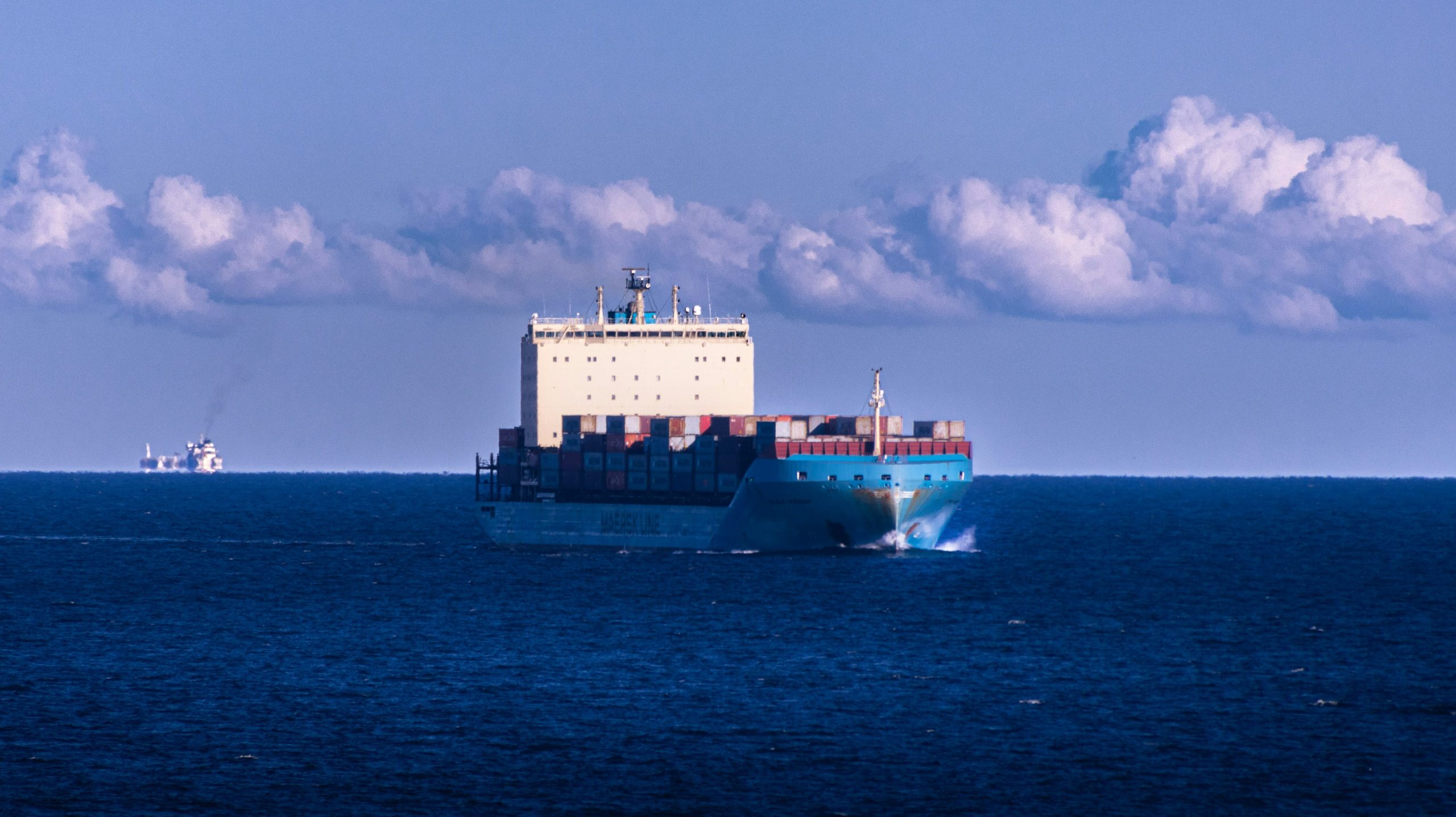
Commercial freight from the United States to Kuwait usually moves by ocean through Shuwaikh or Shuaiba, or by air through Kuwait International Airport.
Ocean freight is commonly used for commercial inventory, machinery, construction equipment, vehicles, industrial materials, and palletized cargo. Air freight is used for urgent spare parts, electronics, medical supplies, samples, and other goods where delivery time takes priority over the lower cost of ocean transportation.
Shuwaikh is Kuwait’s main commercial port, while Shuaiba has a stronger industrial cargo profile. Both handle containerized and general freight, but their facilities and location suit different types of shipments.
RAM International Shipping acts as a freight forwarder rather than the vessel-operating carrier or airline. RAM arranges ocean transportation as a licensed NVOCC and air cargo as an IATA-licensed agent. The vessel or aircraft used for the international movement is operated by the carrier booked for the shipment.
Ocean Freight from USA to Kuwait Through Shuwaikh and Shuaiba
Shuwaikh Port is Kuwait’s main commercial seaport and is located in the Shuwaikh Industrial Area near Kuwait City. Kuwait Ports Authority lists 21 berths and more than 600,000 square meters of storage space. Its 2024 statistics show 613,093 TEU, more than 3.2 million tonnes of general cargo, and substantial vehicle traffic.
That cargo mix makes Shuwaikh a common gateway for containers, vehicles, commercial goods, and general freight moving into Kuwait City and nearby areas.
Shuaiba serves more industrial cargo. Kuwait Ports Authority identifies it as Kuwait’s primary industrial port, handling containers alongside heavy equipment, raw materials, chemicals, and other freight connected with industrial activity.
For machinery, construction equipment, industrial materials, or cargo destined for southern Kuwait, Shuaiba may be compared with Shuwaikh when carrier service is available.
The arrival port is selected according to the carrier schedule, cargo type, equipment requirements, consignee location, and available vessel service. Not every shipment from the United States follows the same port pair.
RAM coordinates the booking with the ocean carrier serving the selected route. Cargo can also require packing, crating, warehousing, consolidation, or transloading before export.
Air Freight from USA to Kuwait
Air freight is used when an ocean schedule does not fit the shipment deadline.
Replacement parts, electronics, pharmaceuticals, medical equipment, samples, high-value components, and urgent commercial stock are common examples.
Kuwait International Airport handles international cargo as well as passenger traffic. Air cargo entering the country is subject to customs processing before release.
Air freight pricing is based largely on chargeable weight. Airlines compare actual gross weight with volumetric weight, so a large lightweight crate can be billed above its scale weight.
Dimensions also need to be checked before booking. A shipment may fall within the airline’s weight limit but still be too large for the aircraft door, pallet system, or loading equipment used on the route.
Lithium batteries, dangerous goods, pharmaceuticals, temperature-sensitive products, long crates, and heavy pieces can require additional paperwork, packaging, or carrier approval.
RAM does not operate aircraft. It coordinates standard air freight, consolidated cargo, priority shipments, charters, dangerous goods, oversized pieces, and temperature-sensitive freight through airline agreements.
Kuwait Customs Documents and Import Requirements
Commercial imports into Kuwait require a defined set of shipping and import documents.
Current U.S. Department of Commerce guidance lists the commercial invoice, certificate of origin, packing list, and bill of lading or air waybill among the core documents required for commercial shipments to Kuwait. Product-specific licenses and certificates can also apply.
Import licensing should be checked separately from the freight documents.
Kuwait’s Ministry of Commerce and Industry provides a General Import License for businesses holding an active commercial license. The ministry describes it as the certificate giving an existing licensed business the right to import goods.
Additional authorities handle certain regulated products. Industrial machinery and spare parts can be subject to licensing through the Public Authority for Industry, while pharmaceuticals, firearms, explosives, animals, and other controlled goods can fall under separate government requirements.
The Kuwaiti importer or customs broker should therefore confirm the HS code, import eligibility, required license, and document set before the shipment leaves the United States.
Kuwait Import Duty, Product Restrictions and Vehicle Rules
Kuwait is part of the GCC Customs Union.
The current common external tariff is 5% of CIF value for most imported goods. Kuwait has exceptions covering hundreds of basic food, agricultural, medical, and pharmaceutical products. Tobacco products are subject to a 100% customs duty.
The 5% rate should not be applied automatically to every shipment. The exact tariff depends on the product classification and any applicable exemption.
Kuwait has not implemented VAT as of 2026. Although Kuwait and other GCC members agreed on a VAT framework in 2016, Kuwait has not yet introduced a general VAT system.
Some products are prohibited or controlled. Current trade guidance identifies categories including alcohol, pork, narcotics, gambling machines, pornographic material, and used medical equipment among prohibited imports. Firearms and explosives require special procedures.
Vehicles need an additional check before booking.
Kuwait’s Ministry of Commerce and Industry states that when a vehicle is more than ten years past its year of manufacture, it must be referred to a vehicle committee for approval. The ministry’s vehicle-import service also lists the bill of lading and export certificate among its required documents.
This is more precise than treating ten years as an automatic blanket ban. Older vehicles may require committee approval, so eligibility should be confirmed before transportation is booked.
Country-of-origin marking and product-specific labeling can also apply, particularly to food, pharmaceuticals, chemicals, and regulated consumer products.
FCL, LCL, Vehicles and Heavy Equipment Shipping to Kuwait
FCL gives one shipper use of the complete container. It is commonly used for commercial inventory, multiple pallets, machinery, industrial materials, and equipment that should remain together during the ocean movement.
LCL allows smaller shipments to share container space. Cargo from several shippers is consolidated before departure and separated again after arrival.
That additional handling should be considered when comparing the two services. LCL can work well for smaller volumes, but consolidation and deconsolidation add handling stages and can extend the complete shipment schedule.
Standard dry containers cover many commercial goods. Large or unusually shaped equipment may require a different setup.
Depending on dimensions and loading requirements, RAM can coordinate flat racks, open-top containers, breakbulk arrangements, project cargo, or RoRo with an ocean carrier offering the required service.
RoRo can be used for suitable cars, trucks, construction equipment, and other wheeled cargo when service is available on the selected route. Container shipping is another option for vehicles or equipment that fits the required container.
Heavy machinery should be quoted using exact length, width, height, gross weight, and loading condition. Approximate dimensions can result in the wrong equipment being booked or the rate changing after the carrier reviews the cargo.
Shipping Cost and Transit Time from USA to Kuwait
Freight costs between the United States and Kuwait vary by cargo and route.
For ocean shipments, the rate can change according to the U.S. origin and departure port, Shuwaikh or Shuaiba as the destination, FCL or LCL service, container type, cargo weight and dimensions, carrier routing, and any special handling requirements.
Air freight is affected more heavily by chargeable weight, dimensions, airline capacity, routing, cargo type, and urgency.
For an actual shipment, RAM’s Freight Rate Calculator can be used with the cargo and route information.
The international freight rate is not necessarily the complete logistics cost. Packing, crating, warehouse handling, terminal charges, insurance, customs brokerage, import duties, storage, specialized equipment, and destination services can be quoted separately.
Transit time also changes by route. Ocean services departing from different U.S. coasts can use different transshipment hubs. LCL needs additional time for consolidation and deconsolidation.
Air freight is substantially faster, but the complete shipment still includes cargo acceptance, possible flight connections, terminal handling, customs clearance, and release.
For cargo with a fixed arrival requirement, the current vessel or airline schedule should be checked after the cargo-ready date is known rather than relying on a permanent USA-to-Kuwait transit estimate.
RAM coordinates the carrier booking and related logistics as the freight forwarder. It does not operate the international vessel or aircraft.
For a quote, provide the commodity, number of pieces or pallets, exact dimensions, gross weight, U.S. origin, destination in Kuwait, and cargo-ready date. Vehicles, machinery, dangerous goods, pharmaceuticals, chemicals, food products, and oversized equipment can require additional information before booking.
The Kuwaiti importer should also verify the HS classification, customs documentation, import license requirements, product labeling, and any permits that apply to the goods.
Request a quote for shipping from the USA to Kuwait based on your cargo, origin, destination, and required delivery schedule.