


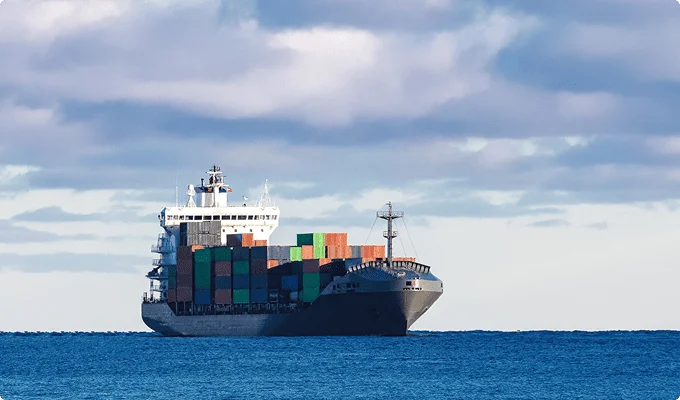
Shipping from the USA to Monaco: Air and Ocean Freight Services
Shipping from the USA to Monaco usually involves more than one transportation method. Although the principality sits on the Mediterranean coast, it does not have a commercial container terminal for regular transatlantic freight. Most ocean shipments arrive at a nearby French or Italian port before continuing to Monaco by road.
Air freight follows a different route, usually through Nice Côte d’Azur Airport in southern France. From there, commercial cargo can be transported to businesses, warehouses, and other receiving locations in Monaco.
RAM International Shipping operates as a freight forwarder, arranging transportation with ocean carriers, airlines, and logistics partners. Rather than operating vessels or aircraft, RAM coordinates international bookings, documentation, and supporting transportation services according to the cargo’s requirements.
How Freight Shipping from the USA to Monaco Works
Monaco is located on the French Riviera, surrounded by France and close to the Italian border. Its small geographical area and limited industrial transportation infrastructure make the choice of an external freight gateway particularly important.
For large commercial shipments, ocean freight through Marseille-Fos or Genoa is often a practical option. These ports have container-handling facilities and established connections with international shipping networks.
Once cargo arrives, it can continue to Monaco by truck. Depending on the shipment, the goods may first pass through a logistics warehouse or consolidation facility in southern France.
For time-sensitive cargo, Nice Côte d’Azur Airport offers access to international air freight services. Other European airports may also be considered when airline connections or cargo requirements make them more suitable.
Monaco’s location also affects customs procedures. The principality is not a member of the European Union, but it forms a customs union with France and is included in the EU customs territory.
This arrangement allows goods already released for free circulation in the EU to move from France into Monaco without another standard import customs declaration.
The most practical shipping route depends on cargo weight, dimensions, transportation costs, customs requirements, and the final delivery address.
Ocean Freight from the USA to Monaco: Ports, FCL, and LCL
Ocean freight is generally the more economical choice for large or heavy shipments that do not require urgent delivery. Commercial inventory, furniture, industrial equipment, machinery, and automotive components can be transported in containers before continuing to Monaco by road.
Port of Marseille-Fos, France, is one of the main gateways to consider. Its container terminals handle international maritime freight and provide road and rail connections with southern France and other European regions.
For Monaco-bound cargo, containers can be unloaded at Marseille-Fos and transferred to trucks for the final transportation stage. The route depends on the terminal used, customs arrangements, and the receiving location.
Port of Genoa, Italy, is another option. Located on the Ligurian coast, Genoa handles containerized freight, vehicles, industrial equipment, and other commercial cargo. Its road connections make it relevant for deliveries toward the French Riviera.
Depending on shipping schedules, containers may also arrive through other European ports before continuing by road or rail toward southern France.
Monaco itself has two well-known ports, Port Hercule and Port de Fontvieille. Both primarily serve recreational vessels and other maritime activities rather than regular international container shipping. They should not be treated as alternatives to major commercial container terminals.
US departure ports may include New York/New Jersey, Norfolk, Savannah, Charleston, Houston, Los Angeles, or Long Beach. The most suitable departure point depends on the cargo’s location and available vessel services.
Businesses generally choose between two container shipping arrangements.
Full Container Load (FCL) gives one shipper exclusive use of a container. Standard options include 20-foot and 40-foot containers, with high-cube equipment available when additional internal height is needed.
FCL is commonly selected for larger commercial orders, regular inventory shipments, or goods that benefit from remaining in a dedicated container. Depending on volume and handling charges, it may be economical even when the container is not completely filled.
Less than Container Load (LCL) allows smaller shipments to share container space with other customers’ goods. Cargo is consolidated before departure and separated at a suitable facility after arrival.
LCL can be practical for smaller orders or a few pallets of merchandise. However, consolidation, deconsolidation, and onward delivery introduce handling stages that can increase the overall transportation time.
Oversized machinery may require flat-rack containers, open-top equipment, or specialized handling. Certain vehicles may also be transported using Ro-Ro services when suitable routes are available.
RAM coordinates container bookings and supporting logistics through its ocean freight services, working with carriers and transportation partners according to cargo specifications.
Monaco Customs Clearance, Import Duties, and VAT
Monaco has a customs arrangement that differs from many other European countries. Although it is not an EU member state, its customs union with France means that Monaco is treated as part of the EU customs territory.
The European Commission’s official guidance on customs and VAT territories confirms that Monaco is treated as French territory for customs, VAT, and excise purposes.
Commercial goods arriving from the United States are therefore subject to applicable EU customs requirements and French customs procedures.
Importers must provide accurate information about the goods, their value, origin, classification, and intended use. The documents commonly required for commercial shipments include:
- Commercial invoice: Identifies the seller, buyer, goods, transaction value, currency, and relevant commercial terms.
- Packing list: Provides details about package quantities, contents, dimensions, and weights.
- Bill of lading or air waybill: Contains the transportation details for the ocean or air shipment.
- Commodity classification: The appropriate EU tariff code used to determine import duties and applicable requirements.
- Additional certificates or permits: Required for certain regulated products, depending on their classification, origin, and intended use.
Economic operators carrying out customs activities generally need an Economic Operators Registration and Identification (EORI) number. Companies with an existing valid EORI registration normally use that number for customs operations throughout the EU customs territory.
Import duties depend on the goods’ tariff classification, customs value, country of origin, and applicable trade measures. Products shipped from the United States are not automatically exempt from import duties.
Monaco applies the same general VAT system and rates as France. Its standard value-added tax (VAT) rate is 20%, while reduced rates may apply to certain qualifying goods and transactions.
The official Monaco Code of Taxes on Turnover establishes the country’s VAT framework and confirms the standard 20% rate.
Import VAT is generally calculated using a taxable amount that includes the customs value, applicable import duties, and certain additional transportation and insurance costs.
Some products require additional checks before import. Food products, pharmaceuticals, chemicals, electrical equipment, and other regulated goods may be subject to EU product standards, inspections, or special authorizations.
Customs arrangements depend on where the goods first enter the EU. Cargo arriving through Genoa may be cleared for free circulation in Italy or transported under an appropriate customs transit procedure before clearance through the relevant customs authorities.
Once goods have been released for free circulation, they can generally continue through France to Monaco without another standard import declaration. The applicable VAT treatment still depends on the transaction and import arrangements.
The agreed Incoterms and sales contract should establish responsibility for transportation charges, customs formalities, import duties, and taxes.
RAM can coordinate shipping documentation and customs-related arrangements through its customs clearance services, working with the relevant parties involved in the shipment. Importers remain responsible for providing accurate cargo information and meeting applicable legal requirements.
Air Freight Shipping from the USA to Monaco via Nice
Air freight is generally the faster choice for shipments that cannot spend several weeks in ocean transportation. It is commonly used for urgent replacement parts, electronics, specialized equipment, valuable commercial goods, and time-sensitive orders.
Monaco does not have an international cargo airport. Although the principality has a heliport, standard commercial air freight generally arrives through an airport in a neighboring country.
Nice Côte d’Azur Airport (NCE) is one of the most practical gateways for Monaco-bound air cargo. Located in southern France, it has freight-handling facilities, customs services, and road connections to Monaco.
American departure airports may include New York JFK, Chicago O’Hare, Los Angeles, Atlanta, and Miami. Depending on airline schedules and available cargo capacity, shipments may travel directly to Nice where suitable services exist or connect through another European airport.
For some cargo, arriving through Paris Charles de Gaulle or Milan Malpensa followed by onward transportation may also be considered. The route should be based on actual airline capacity and the required delivery date.
Air freight pricing is generally based on chargeable weight. Airlines compare a shipment’s actual weight with its volumetric weight, which reflects the space occupied by the cargo, and use the higher figure for calculating charges.
This makes packaging dimensions important, particularly for large but relatively lightweight items.
Lithium batteries, dangerous materials, temperature-sensitive products, and oversized equipment may require approved packaging, additional documentation, or special handling arrangements.
After arrival and the necessary customs procedures, freight can continue by truck to Monaco. RAM arranges international cargo transportation through its air freight services, coordinating suitable flights and supporting transportation with logistics partners.
Ground Freight and Final Delivery Within Monaco
Road transportation is an essential part of most commercial shipments to Monaco. Ocean containers arriving through Marseille-Fos or Genoa generally require an inland transportation stage, while air cargo arriving at Nice Airport must also be delivered by road.
Goods may travel through logistics facilities in southern France before reaching their final destination. This can be useful when several smaller shipments need to be consolidated or when cargo requires storage before delivery.
Monaco’s limited space, narrow streets, and dense urban development can affect freight transportation. Large trucks may face access restrictions, and some receiving locations have limited unloading space.
Deliveries to commercial premises in Fontvieille, La Condamine, Monte Carlo, or other districts may require appropriate vehicles and agreed unloading arrangements.
For example, machinery arriving through Genoa may be transported to a logistics facility near Nice before continuing to a business in Fontvieille. Smaller commercial orders may be delivered using vehicles better suited to urban access.
Before arranging final delivery, the receiving address, unloading facilities, cargo dimensions, and any access restrictions should be checked.
Ground transportation also supports the American export stage. Suppliers may need freight collected from warehouses or manufacturing facilities and delivered to the departure port or airport.
RAM’s ground freight services can support inland transportation within the United States. Deliveries in France and Monaco can be coordinated with appropriate local logistics partners.
Shipping Times, Freight Costs, and Arrangements with RAM
Transit times depend on the American departure location, transportation method, arrival gateway, and final delivery requirements.
Ocean freight, including onward transportation to Monaco, may take approximately 20–45 days under suitable routing arrangements. Some East Coast departures can reach Mediterranean ports sooner, while West Coast shipments, transshipments, and LCL consolidation may require additional time.
Air freight can often take approximately 3–10 days under suitable international transportation arrangements. These figures are indicative estimates rather than guaranteed door-to-door delivery times.
The complete schedule should also account for cargo pickup, export processing, terminal handling, customs clearance, and local transportation.
Freight costs depend on cargo dimensions, weight, container requirements, transportation mode, carrier capacity, and the services included in the booking.
For ocean shipments, trucking from Marseille-Fos or Genoa can be a significant part of the total transportation cost. Air freight quotations may include airport handling, security screening, customs-related services, and delivery by truck.
Customers can use the Freight Rate Calculator to explore preliminary transportation costs. Before confirming a booking, the quotation should be checked for origin charges, terminal handling, customs-related services, and final delivery.
RAM International Shipping coordinates commercial freight transportation between the United States and Monaco through ocean carriers, airlines, and supporting logistics providers.
To prepare a shipment, customers should provide the cargo description, weight, dimensions, American pickup location, and final delivery address. Any special handling requirements, customs information, or delivery deadlines should be identified before booking.
With these details, RAM can review available routes and coordinate cargo collection, international bookings, documentation support, and onward delivery arrangements.
For businesses importing machinery, specialized equipment, or commercial inventory, choosing the arrival gateway together with the final delivery arrangement can help avoid unnecessary handling and additional transportation charges.
Contact RAM International Shipping to discuss the available freight forwarding options for shipping from the USA to Monaco based on your cargo, origin, destination, and required delivery schedule.