


Shipping from the USA to France: Air and Ocean Freight Services
Shipping from the USA to France can involve several transportation stages, particularly when cargo originates far from a major American port or needs to reach a destination outside Paris. The shipment may cross the Atlantic in a container, travel by air to a French airport, or enter Europe through another country before continuing by road.
France has major seaports on both the Atlantic and Mediterranean coasts, international cargo airports, and an extensive inland transportation network. These connections provide different options for moving commercial inventory, industrial machinery, equipment, and other freight from the United States.
RAM International Shipping operates as a freight forwarder, arranging transportation with shipping lines, airlines, and logistics providers. Rather than operating the vessels or aircraft, RAM coordinates the services needed to move cargo between its American origin and the delivery location in France.
Shipping Routes from the USA to France: Ports and Inland Connections
The destination within France influences which transportation route makes sense. A shipment intended for a warehouse near Paris may benefit from a different entry point than cargo headed to Lyon, Marseille, Bordeaux, or an industrial facility in northern France.
Port of Le Havre is one of the country’s main container shipping gateways and a major entry point for cargo arriving across the Atlantic. Located on the English Channel, it forms part of HAROPA PORT, which connects the ports of Le Havre, Rouen, and Paris along the Seine corridor.
Le Havre is particularly relevant for shipments destined for the Paris region and northern France. Its road, rail, and inland waterway connections support cargo distribution beyond the port terminals.
Port of Marseille-Fos serves southern France and the Mediterranean region. The port includes facilities in Marseille and the large industrial and container terminals at Fos-sur-Mer. It handles containerized freight, industrial cargo, vehicles, and other types of shipments.
Port of Dunkirk, located near the Belgian border, is another option for industrial and containerized freight serving northern France. Its location provides access to road and rail connections across the surrounding region.
Ocean shipments may depart from major American gateways such as New York/New Jersey, Norfolk, Savannah, Houston, or Los Angeles/Long Beach. The available sailing schedules and final destination determine which departure port is suitable.
Some freight travels directly to a French port, while other shipments move through European hubs such as Rotterdam or Antwerp before continuing to France. When cargo enters the European Union through another member state, the customs arrangements must reflect whether it is cleared there or transported under a customs transit procedure.
Ground transportation is often necessary to complete the journey. Trucks can collect freight from US suppliers and transport it to an export terminal. In France, road freight connects ports and airports with warehouses, factories, distribution centers, and final delivery addresses.
Ocean Freight from the USA to France: FCL and LCL Shipping
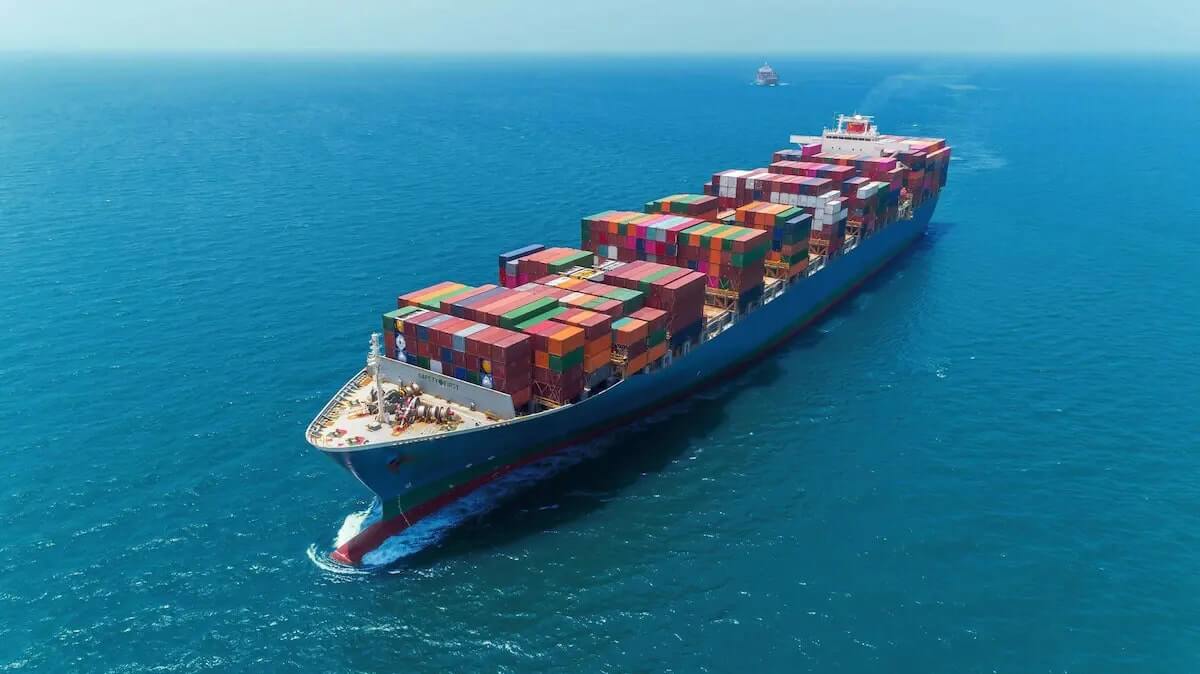
Ocean freight is generally the more economical option for large or heavy shipments that can spend several weeks in transit. Businesses use container shipping for manufacturing equipment, furniture, commercial inventory, automotive components, and other products that do not require urgent delivery.
There are two main arrangements for standard containerized freight.
Full Container Load (FCL) allows one shipper to reserve an entire container for their cargo. The most common options are 20-foot and 40-foot containers, including high-cube equipment that provides additional internal height.
FCL is commonly selected for larger shipments or goods that benefit from remaining together in one container. The container does not need to be completely filled. Depending on cargo volume, consolidation costs, and handling charges, FCL may sometimes be more economical than using shared container space.
Less than Container Load (LCL) is intended for smaller shipments that do not require a dedicated container. Cargo belonging to several customers is consolidated into one container before departure and separated after arrival.
LCL can be useful for businesses importing a few pallets, replenishing inventory in smaller quantities, or arranging occasional international shipments. However, the additional handling at consolidation facilities can extend delivery times.
Not every shipment fits inside a standard enclosed container. Certain types of oversized machinery or industrial equipment may require flat-rack containers, open-top equipment, or alternative shipping arrangements.
Vehicles and wheeled machinery may also be suitable for roll-on/roll-off (Ro-Ro) transportation when an appropriate service is available. Cargo dimensions, weight, operating condition, and port facilities determine which option can be used.
RAM coordinates container bookings and other international cargo arrangements through its ocean freight services. This includes working with ocean carriers and arranging supporting transportation services where required.
Air Freight Shipping from the USA to France
Air freight is an alternative for shipments that cannot wait for ocean transportation. Although it generally costs more, the shorter transit period may justify the expense for urgent commercial orders, replacement parts, electronics, and valuable equipment.
Paris Charles de Gaulle Airport (CDG) is France’s principal international air cargo gateway. Its freight facilities handle shipments arriving from North America and other international markets, with onward connections to destinations throughout France.
Major American departure airports include New York JFK, Chicago O’Hare, Los Angeles, Atlanta, and Miami. Depending on airline schedules and cargo capacity, shipments may travel directly to Paris or connect through another international airport.
Other French airports, including Lyon-Saint Exupéry, may also be considered for particular cargo movements, depending on available freight services and the final destination.
Air freight is normally charged according to chargeable weight. Airlines compare the shipment’s actual weight with its volumetric weight, which reflects the space occupied by the cargo, and use the higher value for pricing.
This matters when shipping large but lightweight products. Packaging dimensions can have a significant effect on transportation costs, so accurate measurements are needed before requesting a quotation.
Airlines also have restrictions on certain goods. Lithium batteries, dangerous materials, and temperature-sensitive products may require specific packaging, documentation, or handling arrangements. Some shipments need additional review before an airline will accept them.
RAM arranges international air transportation through its air freight services, coordinating available routes and related handling requirements with transportation partners.
French Customs Clearance and Import Requirements
France is a member of the European Union, so goods arriving from the United States must comply with the applicable EU customs rules. Importers need to provide accurate cargo information, supporting documents, and any permits required for the products being shipped.
For most commercial shipments, the documentation commonly includes:
- Commercial invoice: Identifies the seller, buyer, goods, transaction value, and relevant commercial terms.
- Packing list: Details the packages, quantities, weights, dimensions, and contents of the shipment.
- Bill of lading or air waybill: Provides transportation information for an ocean or air shipment.
- Commodity classification: The appropriate EU tariff code used to determine customs duties and applicable product requirements.
- Additional certificates or permits: Required for certain regulated products, depending on their classification and intended use.
Businesses involved in customs operations generally need an Economic Operators Registration and Identification (EORI) number. According to the French Customs Authority’s EORI guidance, this identifier is used to identify economic operators involved in customs activities.
Companies established in another EU member state generally use the EORI number issued in their country of establishment. Businesses based outside the EU may need registration in the member state where they first carry out customs operations, depending on their role in the import process.
Import duties depend on the goods’ tariff classification, customs value, origin, and applicable trade measures. Products shipped from the United States are not automatically exempt from EU customs duties.
France’s standard value-added tax (VAT) rate is 20% for metropolitan France. Reduced rates or exemptions may apply to certain products and transactions.
The treatment of import VAT also depends on the importer. According to the French Customs guidance on import VAT, businesses identified for VAT in France generally account for import VAT through their VAT returns. Different arrangements apply to private individuals and certain importers without French VAT registration.
Some goods require additional checks before entering France. Food products, agricultural goods, medicines, chemicals, and certain electrical equipment may be subject to product-specific EU regulations, inspections, or authorization requirements.
The agreed Incoterms should also establish which party is responsible for transportation charges, customs formalities, and import duties. These responsibilities need to be clear before the shipment leaves the United States.
For goods arriving through another EU country, customs clearance may take place at the initial entry point or after transportation under an appropriate transit procedure.
RAM can coordinate shipping documentation and customs-related arrangements through its customs clearance services, working with the relevant parties involved in the shipment.
How Long Does Shipping from the USA to France Take?
Transit times depend on the departure location, transportation method, carrier schedule, and final delivery address. The time spent crossing the Atlantic is only one part of the complete shipping process.
Ocean freight from the United States to France may take approximately 15–50 days, depending on the route and service. Some direct East Coast sailings to Le Havre have shorter port-to-port transit times, while shipments from other US regions or routes involving transshipment can take considerably longer.
LCL cargo may require additional days for consolidation before departure and separation after arrival. Customs examinations, terminal availability, and inland transportation can also extend the total delivery schedule.
Air freight generally offers much shorter transit periods, often around 3–8 business days under suitable international freight arrangements. Actual delivery times depend on airport connections, cargo handling, customs procedures, and onward transportation.
For example, freight arriving at Paris Charles de Gaulle Airport may still need to travel by truck to a distribution center in Lyon or another French city.
A door-to-door estimate should account for pickup in the United States, export processing, international transportation, destination handling, customs clearance, and final delivery.
When a shipment has a fixed deadline, it is worth checking the complete transportation schedule rather than relying only on the published vessel or flight transit time.
Freight Costs and Shipping Arrangements with RAM International Shipping
The cost of shipping freight from the USA to France depends on the cargo, transportation method, departure point, and destination. Container requirements, shipment weight, volume, fuel surcharges, and carrier capacity can all affect the final quotation.
For ocean freight, the total cost may include container transportation, port handling, consolidation or deconsolidation, and inland delivery. Air freight charges may include airport handling, security screening, and additional services required for particular cargo.
Customers can use the Freight Rate Calculator to explore preliminary shipping costs. Before confirming transportation, it is important to check whether the quotation includes pickup, customs-related services, destination charges, and delivery to the final address.
RAM International Shipping works with ocean carriers, airlines, and logistics providers to coordinate freight transportation between the United States and France. Depending on the shipment, this may involve cargo collection, container booking, air freight arrangements, documentation support, and coordination of final delivery.
Road transportation may also be part of the plan. RAM’s ground freight services can support cargo pickup and inland movements within the United States, while appropriate transportation partners can be arranged for the European delivery stage.
Customers should provide the cargo description, dimensions, weight, pickup address, French delivery location, and preferred schedule when requesting freight arrangements. Any special handling requirements should be identified before booking.
Contact RAM International Shipping to discuss the available freight forwarding options for shipping from the USA to France based on your cargo, origin, destination, and required delivery schedule.