Dunnage is material placed around, between, or beneath cargo to protect it during transportation. In shipping, the dunnage meaning covers supports, spacers, cushioning, and blocking materials that prevent movement, reduce damage, or keep goods off the container floor. Dunnage is not part of the product being shipped.
For freight, that may mean timber beneath machinery, inflatable bags between pallets, or fitted supports for automotive parts. The choice depends on cargo weight, shape, and transport conditions.
Dunnage Meaning: What Is Dunnage in Shipping?
Dunnage supports, positions, separates, or protects freight. It can be temporary wood blocking inside a container or a reusable frame holding manufactured components. It travels with the cargo but is not the merchandise itself.
The word also appears outside logistics. In construction, steel dunnage can mean a supporting frame for rooftop equipment; a foodservice dunnage rack keeps supplies off the floor. Historically, sailors also used “dunnage” to describe personal belongings.
What Dunnage Does in a Shipment
Freight faces braking, acceleration, vibration, and vessel motion. Pallets can shift when gaps remain or securing is inadequate. Dunnage helps limit movement and keeps packages from striking one another.
It also distributes weight. Properly designed supports beneath machinery spread concentrated loads across suitable flooring. Spacers between stacked items reduce direct contact and surface damage.
Dunnage can separate goods from damp flooring. Condensation may collect on container walls or drip from the roof as “container rain.” Suitable supports and protective materials reduce contact with moisture, but wet timber can make the problem worse.
Raised supports may also provide forklift clearance when designed for the load. Dunnage works alongside proper packing and restraint; it cannot replace them.
Types of Dunnage Used in Freight Shipping
Wood Dunnage and Timber Blocking
Wood dunnage includes beams, blocks, boards, and wedges. In blocking and bracing arrangements, timber fills gaps and helps transfer securing forces to suitable supports around equipment, crates, and irregular loads.
Wood is easy to cut and fit, but it must be strong enough for the load and sufficiently dry. Regulated solid wood used in international shipments must meet applicable ISPM 15 treatment and marking requirements.
Dunnage Bags and Inflatable Airbags
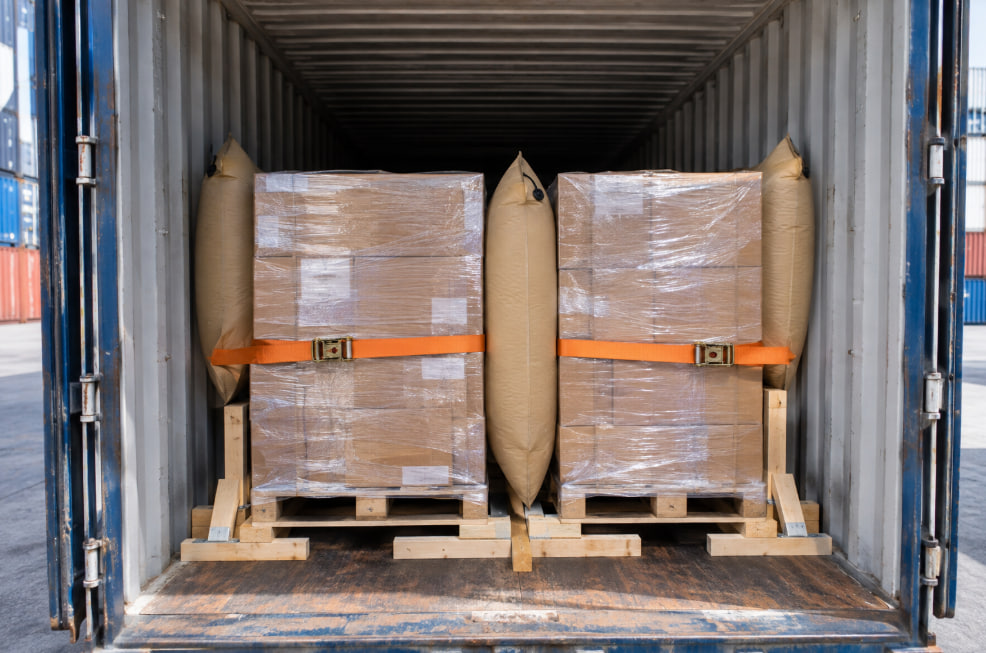
Dunnage bags, also called dunnage airbags, fill suitable gaps between cargo units. Common designs use paper or woven polypropylene outer layers around an inflatable bladder. When inflated correctly, they help prevent cargo from shifting.
They are used between pallets and other stable loads in containers, trailers, and railcars. The bag must match the gap, expected forces, and manufacturer’s pressure limits. Sharp edges and rough surfaces can damage it.
Paper, Corrugated Board, and Honeycomb Panels
Corrugated sheets separate surfaces and protect edges. Honeycomb paperboard panels can provide lightweight spacing or support for cartons and packaged equipment when rated for the intended load.
These materials generally cannot replace engineered restraints for heavy machinery, and exposure to moisture can weaken them.
Foam and Plastic Dunnage
Foam pads, molded inserts, and plastic separators cushion electronics, finished components, and parts vulnerable to scratches.
Rigid plastic trays are often used for repeat shipments. The appropriate material depends on cargo weight, cushioning requirements, and expected handling conditions.
Steel Dunnage and Returnable Systems
Steel frames and racks support heavy or irregular components, particularly in recurring automotive and industrial shipments.
Returnable metal and plastic systems may reduce disposable packaging, but they require return logistics, inspection, and proper securing during transportation.
Dunnage for Parcels and Small Packages
Kraft paper, bubble wrap, foam, and small air pillows cushion parcel contents and fill empty spaces. These lightweight materials are not suitable for restraining heavy pallets or machinery.
Dunnage in Container Shipping
During ocean freight, containers experience motion in several directions. A load that seems secure at the warehouse may shift during handling, road transportation, or a voyage. Cargo must be positioned to distribute weight properly and limit movement.
Blocking and bracing use timber, suitable frames, restraints, and other supports to secure cargo. Dunnage bags can fill selected gaps between stable cargo units. They should not be placed at container doorways without precautions against sudden pressure on the doors when opened.
The CTU Code, developed by IMO, ILO, and UNECE, provides guidance on packing and securing cargo transport units. It covers load distribution, securing methods, packing materials, and the responsibilities of parties involved. The code is a non-mandatory international reference, although individual requirements may apply under national rules or contracts.
Condensation is another concern during long voyages. Dry supports can keep goods away from wet surfaces, while suitable liners and moisture-control materials protect sensitive cargo. Dunnage does not eliminate condensation, and damp wood or packaging can make conditions worse.
Dunnage also counts toward a container’s verified gross mass (VGM) under SOLAS. With Method 2, the shipper adds the masses of the goods, pallets, packaging, dunnage, and other securing materials to the container’s tare mass, using a method approved by the relevant authority. Our guide to calculating VGM explains the process.
The party packing a container is responsible for carrying out the loading and securing work properly under the CTU Code’s guidance, while legal and contractual responsibilities may vary. For a full container load (FCL), packing is often performed at the shipper’s facility or by a hired contractor. For less-than-container load (LCL), a container freight station (CFS) commonly consolidates and secures the combined cargo. The shipper identified under SOLAS remains responsible for obtaining and providing VGM.
If cargo moves from a marine container to a truck trailer through transloading, the original dunnage arrangement may no longer work. The loading team must reassess the cargo and secure it for the next transport leg.
Securing Vehicles with Dunnage
Cars shipped inside containers must be restrained against rolling, sliding, and sideways movement. Wheel chocks or properly positioned wooden blocks can help limit movement, while rated ratchet straps or other suitable lashings provide additional restraint at appropriate attachment points.
For vehicle transportation, the securing method should account for vehicle weight, wheel position, available attachment points, and the carrier’s loading instructions. Chocks alone are generally insufficient for securing a vehicle in a sea container. Straps should not be attached to fragile body panels or unsuitable components.
Specialized frames may be used when several vehicles share a container. They must be rated for the intended loads and properly secured. The loading arrangement should also prevent contact between vehicles and nearby equipment.
ISPM 15 Rules for Wood Dunnage
ISPM 15 is the international standard covering many types of wood packaging material used in cross-border trade, including solid wood dunnage. Its purpose is to reduce the spread of pests carried in untreated timber.
Regulated wood packaging entering the EU or United States generally must receive an approved treatment and bear the recognized IPPC mark. Heat treatment (HT) is a common method. The wood must also meet applicable bark requirements.
The IPPC mark identifies the country, registered producer or treatment provider, and treatment method. Simply writing “treated wood” on shipping documents does not replace the required marking.
Packaging made entirely from certain processed wood materials, including plywood, oriented strand board (OSB), and particleboard, is generally exempt because of how it is manufactured. Wood packaging made entirely from sufficiently thin wood is also exempt under the standard. Solid wood components added to otherwise exempt materials may still need treatment and marking.
Noncompliant wood can lead to inspection, treatment where permitted, removal, destruction, or refusal of entry, depending on local regulations. Additional costs may arise, with responsibility determined by the applicable rules and shipping arrangements. Check timber markings before packing the container.
How to Choose the Right Dunnage
Start with the cargo’s weight, shape, fragility, and expected transport conditions. Consider moisture exposure, handling methods, destination-country wood rules, and whether the dunnage will be discarded or returned.
| Cargo | Common dunnage | Why it is used |
|---|---|---|
| Heavy machinery or equipment | Rated timber blocks, cradles, engineered supports | Supports the load and helps control movement |
| Palletized cartons in containers | Suitable dunnage bags, corrugated separators | Controls gaps and limits rubbing or shifting |
| Fragile finished components | Foam pads, fitted plastic inserts | Cushions surfaces against impact and vibration |
| Cars in containers | Wheel chocks or blocks with rated lashings | Helps prevent rolling and unwanted movement |
| Recurring industrial parts shipments | Returnable metal racks or plastic trays | Maintains positioning across repeat shipments |
| Moisture-sensitive packaged goods | Dry separators, suitable protective liners | Limits contact with damp surfaces |
Additional dunnage increases shipment weight and may reduce usable cargo space. In air freight, packaging weight or dimensions can affect chargeable weight. For other transport modes, the cost impact depends on the applicable freight rates and shipment arrangements. The goal is sufficient protection without unnecessary material.
Common Dunnage Mistakes
Using a dunnage bag of the wrong size or strength is a common mistake. Bags must suit the gap and expected forces, be inflated according to the manufacturer’s instructions, and be protected from sharp edges. They should not replace other restraints when those are needed.
Another problem is placing heavy machinery on weak or poorly positioned supports. This can damage the cargo or overload sections of the container floor. Packing teams should also avoid wet timber, improperly marked regulated wood, and materials that obstruct safe unloading.
Changes during loading can affect the securing arrangement. If pallets are removed or rearranged, the original blocking plan may no longer work. RAM International Shipping can help coordinate freight arrangements with packing and transport partners, while the responsible loading team must check the final cargo arrangement.
Dunnage FAQ
Is Dunnage the Same as Void Fill?
Void fill usually means material placed in empty spaces inside a package. Dunnage is broader: it can fill gaps, support machinery, separate cargo layers, or help restrain pallets inside a container.
Who Pays for Dunnage in Freight Shipping?
That depends on the shipping and packing agreement. A shipper may supply it directly, or a warehouse, packing contractor, or logistics provider may charge for materials and installation.
Can Dunnage Be Reused?
Some plastic trays, steel racks, and purpose-built supports are designed for repeated use. Reuse depends on their condition, design, and applicable import requirements. Damaged or weakened materials should not be reused for cargo restraint.
Are Dunnage Bags Enough to Secure a Container?
Not necessarily. Proper restraint depends on the cargo weight, loading arrangement, support surfaces, and expected transport forces. Dunnage bags are effective only when correctly selected and used as part of a suitable securing system.