

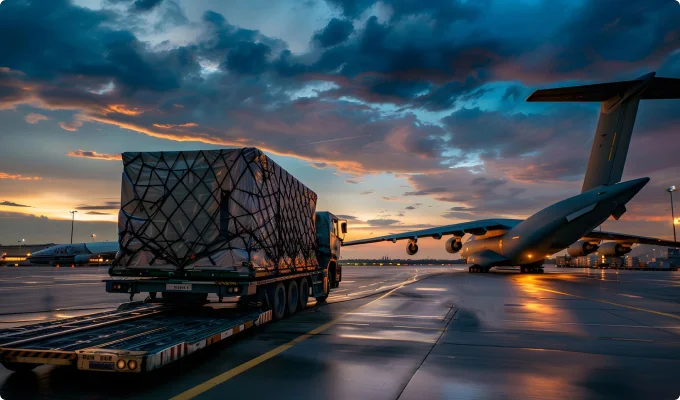
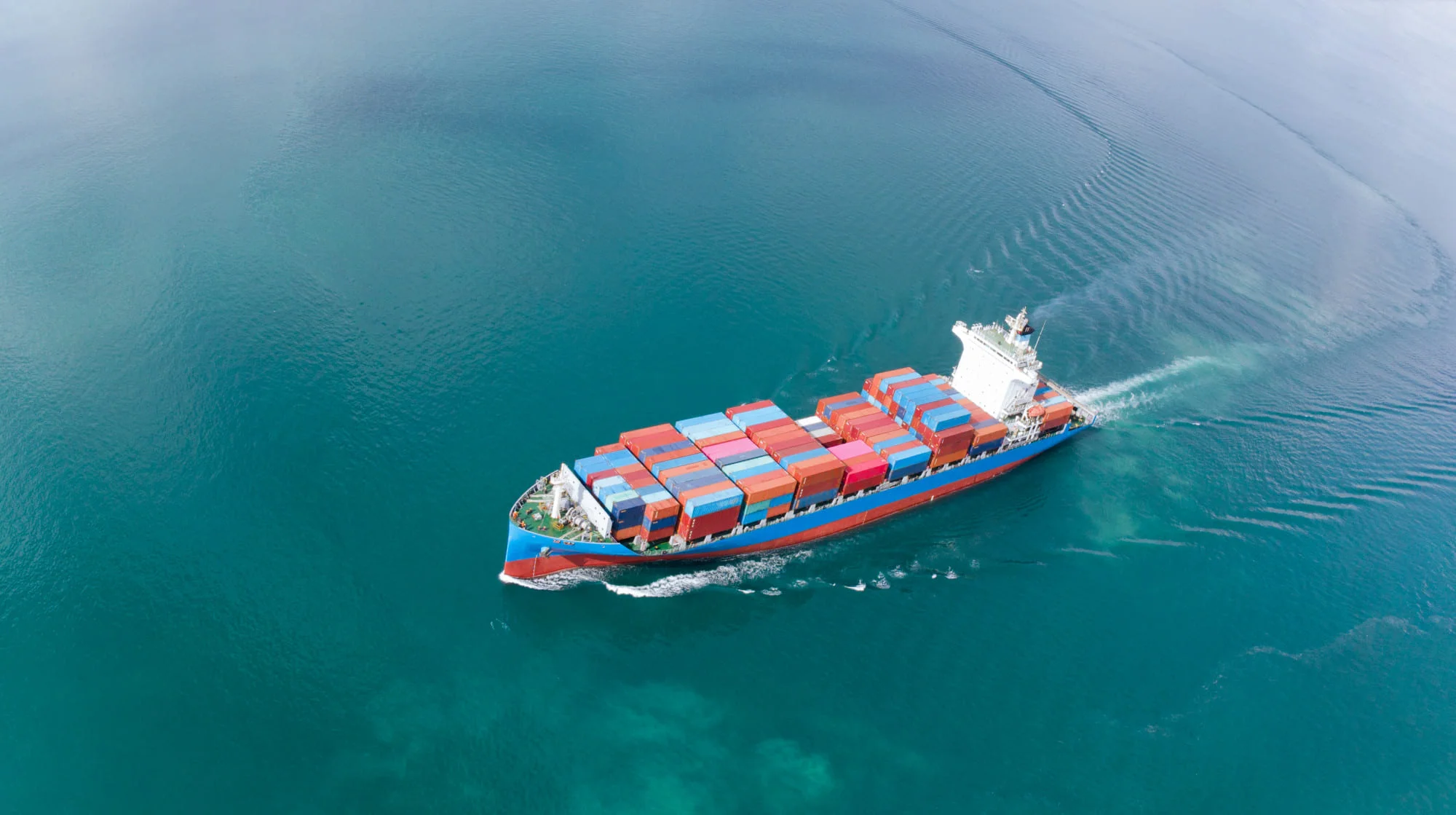
Freight from the United States to Kenya can move by ocean or air, but the route looks different depending on where the cargo needs to end up.
For ocean shipments, the Port of Mombasa is Kenya’s main international cargo gateway. Goods destined for Nairobi, Nakuru, Kisumu, or other inland locations continue from the coast by road, rail, or a combination of transport modes. Air freight is commonly routed through Nairobi and is used when shorter transit time matters more than the lower cost of ocean shipping.
RAM International Shipping works as a freight forwarder. It coordinates space with ocean carriers and airlines, arranges U.S. pickup and export handling, and can combine international freight with warehousing, transloading, and inland transportation. RAM does not operate the vessel or aircraft carrying the cargo. Its ocean division operates as a licensed NVOCC, while its air freight business works as an IATA-licensed agent.
Planning Freight Shipping from USA to Kenya
For Kenya, the final delivery point matters almost as much as the international route.
Ocean cargo arrives on the coast, while much of Kenya’s commercial activity is concentrated farther inland. A shipment to Nairobi therefore involves more than the vessel movement to Mombasa. Port handling, customs clearance, and inland transportation need to be included in the plan.
The same applies at origin. Cargo located in Ohio, Texas, California, or New Jersey may need domestic transportation before it reaches the U.S. port or airport used for export.
Shipment size also changes the available options. A few urgent cartons or pallets may be suitable for air freight. Several pallets, machinery, vehicles, or larger commercial loads are more likely to move by ocean.
Before a quote can be compared properly, the shipper should have the commodity description, piece count, dimensions, weight, U.S. pickup point, Kenyan destination, and cargo-ready date. Regulated goods, dangerous goods, vehicles, and oversized equipment need additional information before a route can be confirmed.
Ocean Freight from USA to Kenya via Mombasa
The Port of Mombasa is the main ocean gateway for freight entering Kenya. Kenya Ports Authority describes it as a gateway to East and Central Africa, with connections to Kenya’s inland market as well as neighboring countries. The port has conventional and container terminals and handles containerized cargo, bulk commodities, petroleum products, and other freight.
Kenya Ports Authority — Port of Mombasa
For container cargo, the main choices are Full Container Load and Less than Container Load.
FCL gives one shipper use of a complete container. It is commonly used for larger commercial shipments, multiple pallets, machinery, equipment, or cargo that should remain together inside one container.
LCL is useful when the shipment does not fill an entire container. Freight from several customers is consolidated, allowing the shipper to use only part of the available container space. LCL also adds consolidation and deconsolidation stages, so the handling and timing are different from FCL.
Some shipments require equipment other than a standard dry container. RAM’s ocean services include coordination of flat racks, open-top containers, breakbulk, project cargo, and RoRo where the cargo and carrier service allow it.
After customs release in Mombasa, cargo can continue inland. Nairobi is a common final destination, but freight may also move to industrial and commercial locations elsewhere in Kenya. The complete quote should therefore distinguish between port-to-port transportation and delivery to the actual consignee.
Air Freight from USA to Kenya
Air freight is used when the shipment cannot wait for an ocean schedule.
Replacement parts, electronics, medical supplies, samples, high-value goods, and urgent commercial inventory are typical examples. Larger freight can also move by air if aircraft capacity and cargo dimensions allow it.
Jomo Kenyatta International Airport in Nairobi is Kenya’s main international aviation gateway and handles commercial air cargo. Kenya Airports Authority regulates airport cargo-handling operations and facilities.
Air freight rates are affected by chargeable weight. The airline compares the shipment’s actual weight with its volumetric weight, so dimensions can influence the price as much as the number shown on the scale.
Piece size also matters operationally. Cargo has to fit aircraft doors, pallets, loading equipment, and available aircraft types. Oversized machinery, batteries, dangerous goods, pharmaceuticals, perishables, and temperature-sensitive cargo should be identified before space is requested.
RAM coordinates international air freight through airline agreements rather than operating its own aircraft. Its current services include standard and time-critical cargo, consolidation, dangerous-goods support, packing and crating, and temperature-sensitive handling.
Kenya Customs Documents and Current KEBS Inspection Rules
Kenyan imports are cleared through a licensed customs clearing agent. Kenya Revenue Authority states that import documentation is processed electronically and lists the Import Declaration Form, customs declaration, commercial invoice, transport document, packing list, permits where required, and other supporting documents among the records used for clearance.
Kenya Revenue Authority — How to Import
One point deserves extra attention for shipments originating in the United States.
Kenya uses a Pre-Export Verification of Conformity program for many imports, but the current KEBS PVoC Manual Version 15 lists the United States of America among countries not subject to the standard PVoC program. Goods supplied from those countries are handled through destination inspection rather than the usual PVoC certification process applied to countries assigned to PVoC contractors.
This is worth checking before every shipment because conformity requirements and product-specific rules can change. A generic statement that every U.S. shipment requires a PVoC Certificate of Conformity before departure would not accurately reflect the current rules.
Some goods also need permits or approvals from other Kenyan authorities. Agricultural products, medicines, controlled chemicals, and other regulated commodities can fall under additional requirements.
The Kenyan importer and clearing agent should confirm the HS classification, current taxes, permits, and standards requirements before the cargo leaves the United States.
Shipping Vehicles and Machinery from USA to Kenya
Vehicles and heavy equipment appear frequently in the USA–Kenya freight market, but passenger vehicles require more checking than ordinary container cargo.
Kenya Revenue Authority states that imported motor vehicles must meet Kenya Bureau of Standards requirements. In general, an imported vehicle must be less than eight years old from the year of first registration and right-hand drive. Vehicle imports are also subject to roadworthiness requirements.
This is particularly relevant for cargo originating in the United States because most passenger vehicles manufactured for the U.S. market are left-hand drive.
A U.S.-registered vehicle should therefore be checked for Kenyan import eligibility before pickup, port delivery, or ocean booking. There are limited exceptions for certain special circumstances, but a standard left-hand-drive passenger vehicle should not be assumed to qualify for import.
Used vehicles also have their own inspection framework, separate from the general-goods PVoC rules discussed above. Current KEBS documentation maintains specific inspection provisions for used motor vehicles and mobile equipment.
Machinery and industrial equipment may be more straightforward from a vehicle-regulation perspective, but dimensions, weight, lifting points, and loading method still need to be reviewed. Depending on the equipment, the shipment may require a container, flat rack, open-top equipment, RoRo, or breakbulk handling.
Shipping Cost and Transit Time from USA to Kenya
There is no single USA-to-Kenya freight rate that works for every shipment.
Ocean pricing changes with the U.S. origin, departure port, FCL or LCL service, container type, cargo volume, weight, destination, inland trucking, carrier pricing, and port charges.
Air freight is driven more heavily by chargeable weight, dimensions, airline capacity, routing, commodity, and required service level.
Online transit estimates also vary widely. Current companies ranking for this route publish very different numbers for ocean freight, partly because some quote port-to-port transportation while others include consolidation, customs, and delivery to Nairobi. Current carrier routing and transshipment points can change the schedule further.
For that reason, a fixed number of days is better treated as an estimate rather than a promise.
Air freight is much faster in transit, but pickup, export handling, flight connections, customs processing, and final delivery still affect the full schedule.
The international freight rate may also exclude other parts of the shipment. U.S. pickup, warehouse handling, packing, documentation, cargo insurance, destination charges, customs duties and taxes, storage, and delivery within Kenya can all affect the final cost.
Freight Forwarding from USA to Kenya with RAM International Shipping
RAM International Shipping coordinates the transportation rather than acting as the vessel-operating ocean carrier or airline.
For ocean freight, RAM is a licensed NVOCC and arranges FCL, LCL, RoRo, project, and oversized shipments through ocean carriers. The company can issue its own bill of lading as an NVOCC and coordinate U.S. drayage, warehousing, transloading, and other services before export.
For air cargo, RAM operates as an IATA-licensed agent with airline agreements and coordinates international air export from major U.S. gateways.
U.S. inland transportation can also be part of the shipment. RAM operates its own ground fleet in its core U.S. service area and coordinates movement between suppliers, warehouses, airports, and seaports.
To quote a shipment to Kenya, provide the commodity, quantity, dimensions, gross weight, pickup location, destination, and cargo-ready date. Vehicles, machinery, dangerous goods, oversized cargo, and regulated products need additional details.
RAM can then coordinate the available air or ocean route with the appropriate carrier and supporting services for that shipment.
Request a quote for shipping from the USA to Kenya with the cargo information needed to review the current freight options.