Anyone buying or selling goods internationally eventually has to answer a basic question: where does the seller’s responsibility end and the buyer’s begin?
The answer affects freight charges, customs clearance, insurance, inland transportation, and who bears the risk if goods are lost or damaged at a particular stage of the journey. Incoterms® provide a common set of rules for defining those responsibilities.
The International Chamber of Commerce (ICC) publishes the Incoterms rules. The current edition, Incoterms 2020, contains 11 terms. Seven can be used with any mode of transport, including air freight, ocean freight, road, rail, or a combination of several modes. Four are reserved for sea and inland waterway transport.
Incoterms cover only part of a sales transaction. They do not define payment terms, transfer of ownership, every contractual obligation, or all documents required for customs clearance. Their main purpose is to define delivery obligations, allocation of costs, and the point at which risk passes between seller and buyer.
This distinction matters before requesting a freight quote. A shipment sold EXW can leave the buyer responsible for transportation almost from the seller’s door. Under DDP, the seller takes responsibility much farther into the destination country. Under terms such as CPT or CIF, the point where the seller pays transportation costs is different from the point where the buyer starts carrying the risk.
What Are Incoterms and What Do They Define?
Incoterms, short for International Commercial Terms, are standardized trade rules used in contracts for the sale of goods. They define the respective obligations of the buyer and seller for delivery, transportation, customs formalities, costs, and certain shipping documents.
They also establish the delivery point where the risk of loss or damage passes from the seller to the buyer. This is one of the most important parts of any Incoterm.
Cost and risk do not always transfer at the same place.
Under some rules, the seller may continue paying transportation costs after the risk has already transferred to the buyer. CPT, CIP, CFR, and CIF are clear examples. This distinction can be missed when companies look only at who pays the freight invoice.
Incoterms also identify which party is responsible for export and import formalities. With EXW, the buyer carries most of the responsibility. With DDP, the seller handles both export and import clearance. Between those two ends are several arrangements that divide the work differently.
The exact named place also matters. Writing only “FCA” or “DAP” in a sales contract leaves an important part of the agreement undefined. The parties should identify the agreed place or port and state the version being used, for example:
FCA [named place], Incoterms® 2020
or
CIF [named port of destination], Incoterms® 2020
Although Incoterms 2020 is the current edition, older versions do not automatically become invalid. Parties can still agree to use Incoterms 2010 or an earlier edition as long as the version is clearly identified in their contract and documentation.
Incoterms 2020 List: All 11 Shipping Terms
Incoterms 2020 divides the 11 rules into two transport categories.
| Incoterm | Full Name | Transport Mode | Delivery / Risk Summary |
| EXW | Ex Works | Any mode | Seller’s premises or another named place |
| FCA | Free Carrier | Any mode | Named place where goods are delivered to the carrier |
| CPT | Carriage Paid To | Any mode | Risk passes at delivery to carrier; seller pays carriage to named destination |
| CIP | Carriage and Insurance Paid To | Any mode | Same basic risk structure as CPT, with seller-provided insurance |
| DAP | Delivered at Place | Any mode | Named destination, ready for unloading |
| DPU | Delivered at Place Unloaded | Any mode | Named destination, after unloading |
| DDP | Delivered Duty Paid | Any mode | Named destination, import-cleared and ready for unloading |
| FAS | Free Alongside Ship | Sea/inland waterway | Alongside vessel at port of shipment |
| FOB | Free on Board | Sea/inland waterway | On board vessel at port of shipment |
| CFR | Cost and Freight | Sea/inland waterway | Risk passes on board at origin; seller pays freight to destination port |
| CIF | Cost, Insurance and Freight | Sea/inland waterway | Same basic structure as CFR, with seller-provided insurance |
The seven terms in the first group can be used for air freight as well as ocean, road, rail, and multimodal transportation. FAS, FOB, CFR, and CIF should be used only where delivery takes place in connection with a vessel in sea or inland waterway transport.
Incoterms Explained for Any Mode of Transport
EXW – Ex Works
EXW places the smallest transport obligation on the seller and a large share of the work on the buyer.
The seller makes the goods available at its premises or another agreed location, such as a factory or warehouse. Under the standard EXW rule, the seller is not required to load the goods onto the collecting vehicle and is not responsible for export customs clearance.
The buyer takes over the transportation process from that point. This can mean arranging pickup, loading, export procedures, main carriage, import clearance, duties, and final delivery.
Risk also transfers early. Once the goods have been placed at the buyer’s disposal at the agreed location, the buyer bears the risk associated with their subsequent movement.
EXW can be used for air, ocean, road, rail, and multimodal freight. It is often better suited to domestic trade because an international buyer may face practical difficulties carrying out export formalities in the seller’s country.
For an international shipment, that practical issue should be considered before EXW is written into the sales agreement.
FCA – Free Carrier
FCA gives the seller more responsibility at origin than EXW.
The seller delivers the goods to a carrier or another party nominated by the buyer at an agreed location. That location can be the seller’s premises, a carrier’s facility, a freight terminal, or another named point.
The precise location affects the seller’s loading obligations, so it should be clearly stated in the contract.
The seller handles export customs clearance. Once delivery has taken place at the named point, risk passes to the buyer. The buyer is then responsible for the main transportation and the risks that follow.
FCA can be used with any transport mode. This makes it relevant to both air freight and containerized ocean freight.
Incoterms 2020 also changed FCA to address transactions where banks require an on-board bill of lading. The parties may agree that the buyer instructs its carrier to issue an on-board bill of lading to the seller after the goods have been loaded aboard the vessel.
That change is particularly relevant where an FCA shipment is financed through a documentary credit.
CPT – Carriage Paid To
CPT is one of the terms where cost and risk move at different points.
The seller contracts and pays for transportation to the named place of destination. However, the seller does not keep the transportation risk all the way to that destination.
Risk passes when the seller delivers the goods to the carrier. Where several carriers are involved, this can mean risk transfers when the goods are handed to the first carrier even though the seller continues paying for transportation much farther along the route.
For example, a shipment may move by truck to an airport or seaport, continue internationally, and then move inland at destination. CPT can cover a multimodal route like this because it is not limited to one type of transportation.
The seller handles export formalities and pays the contracted carriage to the named destination. The buyer handles import formalities.
CPT does not require the seller to provide cargo insurance. Since the buyer may carry the risk during a significant part of transportation, the insurance position should be considered separately when the sales contract is prepared.
CIP – Carriage and Insurance Paid To
CIP follows a similar structure to CPT but adds an insurance obligation for the seller.
The seller delivers the goods to the carrier and pays transportation costs to the agreed destination. Risk still passes when the goods are delivered to the carrier rather than when they arrive at the named destination.
The seller also contracts and pays for cargo insurance covering the buyer’s risk during transportation.
Under Incoterms 2020, CIP requires a higher default level of insurance than CIF. CIP calls for coverage compliant with Institute Cargo Clauses (A), or similar clauses, unless the parties agree otherwise. CIF retains the lower Institute Cargo Clauses (C) default.
CIP can be used for any mode of transport, including air freight and multimodal container shipments.
CIP and CIF should not be treated as interchangeable. Their names both refer to carriage and insurance, but they apply differently. CIP can cover air, road, rail, ocean, or combined transportation. CIF is restricted to sea and inland waterway transportation.
DAP – Delivered at Place
Under DAP, the seller takes responsibility much farther into the transport chain.
The seller arranges transportation to an agreed place at destination and bears the risk until the goods reach that place. Delivery occurs when the goods are made available to the buyer on the arriving means of transport, ready to be unloaded.
The buyer is responsible for unloading.
The seller takes care of export formalities, while import customs clearance remains the buyer’s responsibility. Any import licenses, duties, and related destination formalities therefore need to be handled by the buyer unless the parties have made separate arrangements outside the Incoterm itself.
The named place can be a buyer’s warehouse, another business location, or another agreed inland delivery point.
DAP can be used with air freight, ocean freight, trucking, rail, or a combination of modes. If customs clearance is required before the cargo can continue to the final delivery location, the buyer must complete the necessary import formalities in time for the seller to finish the DAP delivery.
DPU – Delivered at Place Unloaded
DPU is the only Incoterm under which the seller is specifically responsible for unloading the goods at the named place of destination.
The seller arranges and pays for transportation to that location and carries the risk until the cargo has been unloaded and placed at the buyer’s disposal.
This unloading obligation separates DPU from DAP.
Under DAP, delivery takes place before unloading. Under DPU, delivery takes place after unloading.
The seller handles export procedures, while the buyer remains responsible for import clearance and applicable import formalities.
DPU can be used with any transport mode. The destination does not have to be a transport terminal. This is one reason the ICC changed the former DAT — Delivered at Terminal — term to DPU in the 2020 edition.
The new name makes clear that the agreed place can be somewhere other than a terminal, provided the seller can arrange unloading there.
DDP – Delivered Duty Paid
DDP places the greatest set of transport and customs obligations on the seller among the 11 Incoterms.
The seller arranges transportation to the named destination, handles export clearance, handles import clearance, and pays the duties connected with importation. Risk remains with the seller until the goods are delivered at the destination on the arriving means of transport, ready for unloading.
The buyer normally takes over after that delivery point and handles unloading.
DDP can look attractive to a buyer because much of the international logistics process remains with the seller. For the seller, however, it requires careful checking before the contract is signed.
Import rules differ from country to country. A foreign seller may not always be able to act as importer or complete local customs and tax procedures in its own name. A seller considering DDP should therefore verify that it can actually carry out import clearance at the destination.
If this is not possible, another term such as DAP may fit the transaction better.
Ocean Freight Incoterms: FAS, FOB, CFR and CIF
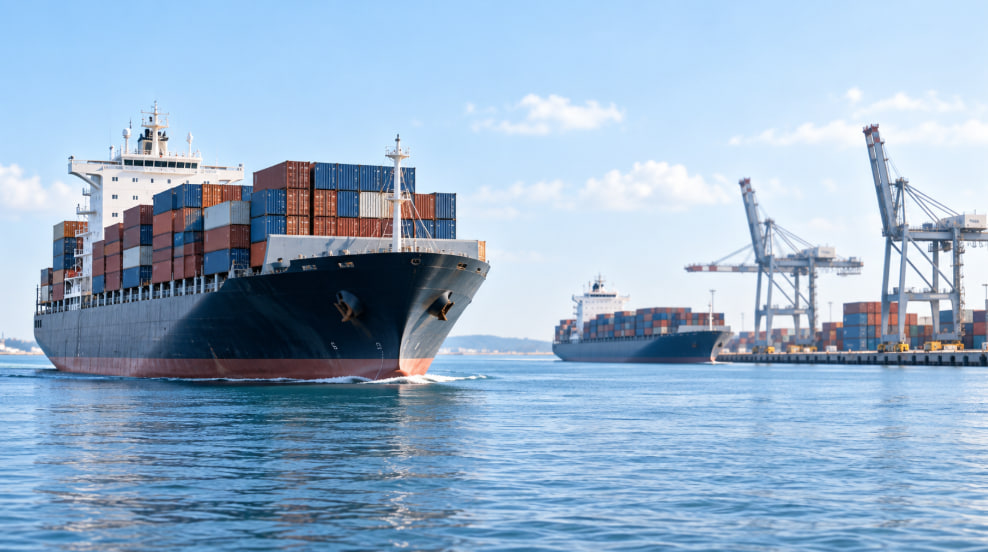
Four Incoterms are specifically reserved for sea and inland waterway transportation. They should not be used for an air freight shipment.
With these four terms, delivery is tied directly to the vessel at the port of shipment.
FAS – Free Alongside Ship
Under FAS, the seller delivers the goods alongside the vessel nominated by the buyer at the agreed port of shipment.
This may mean placing the goods on a quay or barge alongside the ship. Once delivery has taken place, risk passes to the buyer. The buyer then handles the main ocean carriage and the costs and risks that follow.
The seller is responsible for export clearance and transportation to the agreed point alongside the vessel.
FAS is more naturally suited to cargo that can actually be delivered alongside a vessel. It may be less suitable for containerized freight because containers are normally delivered to a container terminal rather than physically alongside the ship.
For container cargo handed to a carrier at a terminal before vessel loading, FCA may correspond more closely to the real delivery process.
FOB – Free on Board
FOB moves the delivery point one stage farther than FAS.
The seller delivers the goods on board the vessel nominated by the buyer at the named port of shipment. Risk transfers to the buyer when the goods are on board the vessel.
The seller handles transportation and export requirements up to that delivery point. The buyer arranges the main ocean carriage and carries the risk after loading.
FOB is sometimes used casually in commercial discussions for almost any shipment where the buyer pays the international freight. That is broader than the actual Incoterms rule.
Under Incoterms 2020, FOB is only for sea and inland waterway transportation. It should not be used for air freight.
There is also a practical issue with containerized shipping. Containers are often delivered into a terminal and handed to the carrier before they are physically loaded onto a vessel. FCA may be more suitable where the contractual delivery point is that earlier carrier handover.
CFR – Cost and Freight
CFR is another example where the party paying the freight is not necessarily the party carrying the transportation risk.
The seller delivers the goods on board the vessel and pays the freight needed to move them to the named port of destination.
Risk, however, transfers to the buyer when the goods are on board the vessel at the port of shipment. It does not remain with the seller until the vessel reaches the destination port.
This difference matters if goods are lost or damaged during the voyage.
The seller handles export clearance and arranges the ocean carriage. The buyer handles import formalities at destination.
CFR does not require the seller to purchase cargo insurance for the buyer. Insurance therefore needs to be considered separately.
Because CFR is restricted to sea and inland waterway transport, it is not an air freight term. Where a shipment includes an inland or multimodal delivery structure that does not fit the vessel-based delivery point, CPT may be a better match.
CIF – Cost, Insurance and Freight
CIF follows the same basic delivery and risk structure as CFR but adds cargo insurance arranged by the seller.
The seller delivers the goods on board the vessel, arranges and pays for transportation to the named port of destination, and obtains insurance for the buyer’s risk during carriage.
Risk still transfers when the goods are on board the vessel at the port of shipment. The seller’s obligation to pay freight and insurance to destination does not mean the seller continues carrying the risk until the cargo arrives.
CIF can be used only for sea or inland waterway transportation.
Incoterms 2020 maintains Institute Cargo Clauses (C), or similar minimum coverage, as the default insurance level under CIF. The parties can agree to higher coverage if the shipment requires it. This is different from CIP, where the default insurance requirement is higher.
CIF is a vessel-based rule associated with maritime transportation. CIP can be used across different transport modes and is often a better fit for multimodal movements.
Incoterms for Air Freight vs Ocean Freight
Not every Incoterm works with every shipment.
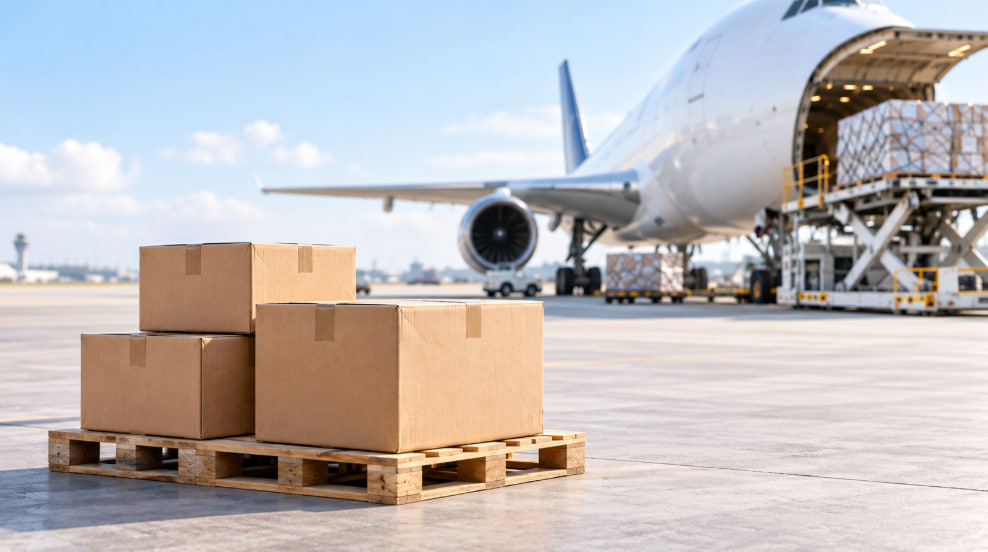
For air freight, the applicable Incoterms 2020 rules come from the seven terms that can be used with any mode:
EXW, FCA, CPT, CIP, DAP, DPU, and DDP.
FAS, FOB, CFR, and CIF are not air freight Incoterms because their delivery rules depend on a vessel and a sea or inland waterway port.
Ocean freight is different because both groups can potentially apply.
An ocean shipment can use one of the sea-specific terms, but it can also use an all-mode rule such as FCA, CPT, CIP, DAP, DPU, or DDP. The correct choice depends on where contractual delivery takes place and how the cargo is handed to the carrier.
Container shipping is a good example.
A container may be handed to the carrier at a terminal days before it is loaded onto a vessel. Under FOB, the contractual risk transfer takes place when the goods are on board the ship. Under FCA, the parties can select an earlier carrier handover point that reflects how containerized freight is actually handled.
For bulk or breakbulk cargo delivered directly alongside or onto a vessel, FAS or FOB can fit the physical movement more closely.
The mode of transport is one part of selecting an Incoterm. The actual handover point between seller, carrier, and buyer also needs to match the wording in the sales contract.
What Changed in Incoterms 2020?
Incoterms 2020 retained 11 rules, but several details changed from the 2010 edition.
The most visible change was the replacement of DAT, Delivered at Terminal, with DPU, Delivered at Place Unloaded. The change makes clear that delivery after unloading can take place at any agreed location and is not restricted to a terminal.
The insurance requirements for CIP and CIF also became different. CIP now calls for the broader Institute Cargo Clauses (A) level or similar coverage by default, while CIF retains Institute Cargo Clauses (C) as its default minimum.
FCA was revised to address situations where a seller needs an on-board bill of lading, often in transactions involving banks or documentary credits. The buyer and seller can agree that the buyer will instruct its carrier to issue the seller an on-board bill of lading after vessel loading.
Incoterms 2020 also places the costs associated with each rule together in the A9/B9 articles, making the allocation of costs easier to review.
The new edition recognizes that parties may sometimes use their own means of transportation rather than contracting a third-party carrier under FCA, DAP, DPU, and DDP. Security-related transport requirements also receive more detailed treatment.
Businesses working with contracts created before 2020 should therefore check which edition is named rather than assuming the latest rules automatically apply.
What Incoterms Do Not Cover
Incoterms deal with transportation responsibilities, costs, delivery, and risk, but they do not define every part of an international sale.
They do not identify the goods being sold or set their price. They do not determine the method or timing of payment between buyer and seller.
They also do not decide when ownership or title to the goods passes. The transfer of risk under an Incoterm should not be confused with the legal transfer of ownership.
Incoterms do not provide a complete list of documents needed for customs clearance in the destination country. Import documentation depends on the goods, countries involved, and local regulations.
They also do not determine liability when goods do not conform to the sales contract, consequences of failure to perform contractual obligations, or how disputes will be resolved. Those matters belong elsewhere in the sales contract and applicable law.
For U.S. exporters, another point is worth noting. The Incoterm chosen in a sale does not determine whether an export is classified as a standard or routed export transaction under the U.S. Foreign Trade Regulations. Incoterms are commercial rules; they do not replace U.S. export regulations.
An Incoterm should therefore be treated as one part of the sales and shipping arrangement rather than a complete international trade contract.
How to Choose the Right Incoterm for a Shipment
There is no Incoterm that is automatically best for every international shipment.
Start with the actual transport process. Is the cargo moving by air, ocean, road, or several modes? If air freight is involved, the four sea-only rules can immediately be excluded.
Then identify the real delivery point. Is the seller making the cargo available at its warehouse? Delivering it to the buyer’s carrier? Paying transportation to destination? Delivering to the buyer’s premises?
The next question is risk. Both parties should understand exactly when the seller stops bearing the risk of loss or damage.
This deserves particular attention with C-group terms. A seller using CPT, CIP, CFR, or CIF may pay transportation to a distant destination while risk transfers much earlier. The freight payment point and risk transfer point should not be treated as the same thing.
Customs responsibilities also matter. A buyer purchasing EXW takes on substantial work at origin. A seller agreeing to DDP takes responsibility for import clearance at destination. Before using either arrangement internationally, the responsible party should confirm that it can actually complete the required customs procedures.
Insurance is another factor. CIP and CIF require the seller to arrange insurance, but with different default levels of cover under Incoterms 2020. Other Incoterms do not create the same seller insurance obligation, so cargo insurance may need to be agreed separately.
Finally, write the term properly in the contract. Include the specific named place or port and the chosen edition of the rules. A precise delivery point is much more useful than an Incoterm abbreviation on its own.
A three-letter Incoterm can change who pays major shipping costs and who carries the risk during transport.
For shipments involving air freight, ocean freight, inland transportation, or several modes in one route, RAM International Shipping can review the transportation requirements and provide freight options based on the cargo, origin, destination, and agreed shipping terms.