International vehicle shipping has become increasingly popular in recent years as businesses, dealerships, collectors, and private buyers continue purchasing vehicles from overseas markets. Whether transporting a standard passenger car, luxury vehicle, SUV, motorcycle, or heavy equipment, choosing the right shipping method is one of the most important decisions in the entire logistics process.
Two of the most widely used methods for international vehicle transportation are Ro-Ro shipping and container shipping. Both options are commonly used for ocean freight between the United States, Europe, the Middle East, and other major global markets. However, each method works differently and offers unique advantages depending on the type of vehicle, budget, destination, and level of protection required.
Understanding the differences between Ro-Ro and container shipping helps importers and exporters choose the most efficient and practical transportation solution for their needs.
What Is Ro-Ro Shipping?
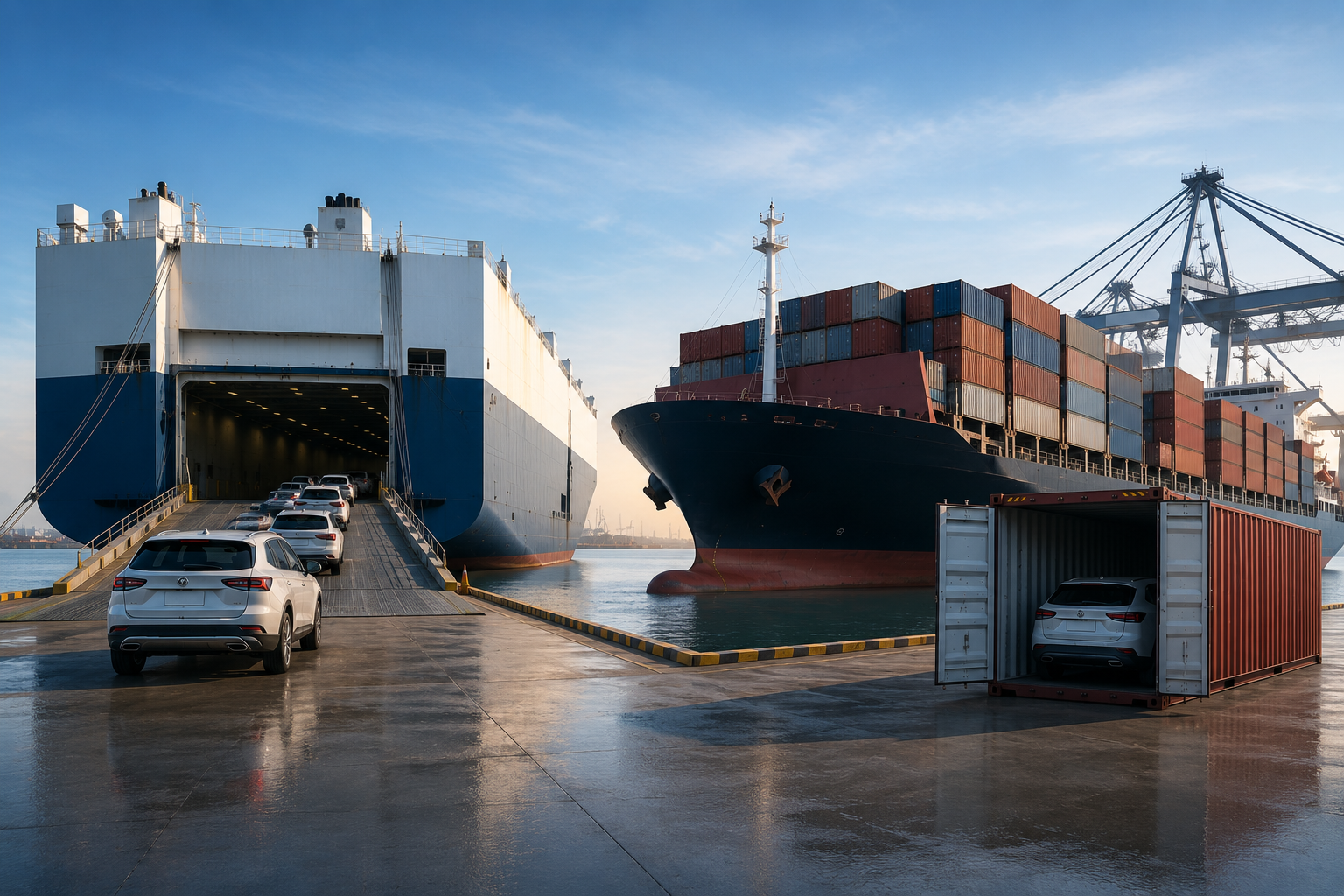
Ro-Ro stands for “Roll-on/Roll-off,” a shipping method specifically designed for wheeled cargo. Vehicles are driven directly onto specialized vessels at the departure port and driven off once the vessel arrives at the destination terminal.
Ro-Ro carriers function similarly to massive floating parking structures, with multiple enclosed decks designed to securely transport thousands of vehicles during a single voyage.
This shipping method is widely used for:
- Passenger vehicles
- SUVs and pickup trucks
- Commercial trucks
- Buses
- Construction machinery
- Agricultural equipment
Because vehicles remain operational throughout the loading and unloading process, Ro-Ro transportation is considered one of the most efficient methods for standard vehicle exports.
How Container Shipping Works
Container shipping involves loading vehicles into sealed shipping containers before ocean transport. Depending on the vehicle size and shipping arrangement, containers may hold one or multiple vehicles.
Unlike Ro-Ro transportation, where vehicles are exposed to shared cargo decks, container shipping provides a fully enclosed environment that offers additional cargo protection throughout the journey.
Vehicles inside containers are secured using specialized straps, wheel chocks, and stabilization equipment to minimize movement during ocean transit.
Container shipping is commonly used for:
- Luxury and exotic vehicles
- Classic and collectible cars
- Non-operational vehicles
- Motorcycles
- High-value exports
- Vehicles shipped together with personal belongings
Because containers provide added security and flexibility, this shipping method is often preferred for sensitive or premium cargo.
The Main Difference Between Ro-Ro and Container Shipping
The biggest distinction between the two methods lies in how vehicles are handled and protected during transportation.
With Ro-Ro shipping, vehicles are driven directly onto the vessel and remain inside enclosed cargo decks until arrival. The process is straightforward and highly efficient, making it ideal for operational vehicles and large-scale automotive transportation.
Container shipping, by contrast, involves additional loading procedures. Vehicles must be carefully positioned inside containers and secured before export. While this process requires more preparation, it also provides greater protection from external conditions and handling risks.
In simple terms, Ro-Ro focuses on operational efficiency, while container shipping prioritizes cargo security and flexibility.
Advantages of Ro-Ro Shipping
Ro-Ro transportation remains one of the most popular methods for international vehicle shipping because of its simplicity and scalability.
One major advantage is the speed of terminal operations. Since vehicles are driven directly onto vessels, loading and unloading procedures are generally faster compared to containerized cargo handling.
Ro-Ro shipping is also widely available on major international trade routes, especially between the United States and Europe, where automotive exports remain in high demand.
For standard passenger vehicles, this method is often considered highly practical because it minimizes handling complexity throughout the logistics process.
Additional advantages include:
- Efficient port operations
- Simplified loading procedures
- Suitable for oversized wheeled equipment
- Strong availability on global trade routes
- Ideal for high-volume automotive transportation
For dealerships, fleet operators, and exporters moving multiple operational vehicles, Ro-Ro shipping often provides an efficient large-scale solution.
Advantages of Container Shipping
Container shipping offers a completely different set of benefits, particularly for vehicles requiring additional security and protection.
Because vehicles remain sealed inside containers during transit, they are less exposed to environmental conditions such as salt air, moisture, and external handling activity. This makes container transportation especially attractive for luxury, exotic, and collectible vehicles.
Container shipping also allows greater cargo flexibility. Personal belongings, spare parts, and additional cargo may sometimes be shipped together with the vehicle depending on shipping regulations and destination requirements.
Another major advantage is the ability to transport non-operational vehicles. Since the vehicle does not need to be driven onto the vessel, container shipping can accommodate damaged, project, or auction vehicles more easily.
Container shipping is often preferred for:
- High-value vehicles
- Rare collector cars
- Salvage auction purchases
- Electric vehicles
- Motorcycles and specialty cargo
- Long-distance international shipments
Although container shipping may involve additional logistics coordination, many customers choose it for the added protection and reduced exposure during transit.
Which Shipping Method Is More Secure?
Security is one of the most important considerations in international vehicle transportation.
Container shipping generally provides a higher level of physical protection because the vehicle remains enclosed inside a sealed steel container throughout the journey. This reduces exposure to weather, port activity, and external contact.
Ro-Ro vessels are also highly secure, but vehicles remain accessible inside shared cargo decks during terminal operations. While major carriers follow strict safety procedures, container shipping is often viewed as the preferred option for customers prioritizing maximum protection.
For standard operational vehicles, both methods are considered reliable when handled by experienced shipping providers.
Vehicle Condition and Shipping Eligibility
The condition of the vehicle plays a major role when selecting a shipping method.
Ro-Ro shipping usually requires vehicles to remain operational because they must be driven onto and off the vessel safely. Vehicles with severe mechanical issues, missing wheels, or significant structural damage may not qualify for Ro-Ro transport.
Container shipping offers greater flexibility for non-running vehicles since loading equipment such as forklifts and winches can be used during the stuffing process.
This is especially important for:
- Salvage vehicles
- Restoration projects
- Luxury cars with low ground clearance
- Damaged auction vehicles
- Prototype or custom-built cars
Because of this flexibility, container shipping is commonly used within specialized automotive export markets.
Transit Time and Logistics Planning
Transit times for Ro-Ro and container shipping are often relatively similar because both methods rely on ocean freight carrier schedules and port operations.
However, container shipments may sometimes involve additional preparation and consolidation procedures before departure. Ro-Ro shipping, on the other hand, can offer more streamlined terminal processing for operational vehicles.
The overall delivery timeline depends on several factors:
- Departure and destination ports
- Vessel schedules
- Customs clearance
- Port congestion
- Inland transportation coordination
- Seasonal shipping demand
Proper logistics planning remains essential regardless of the shipping method selected.
Insurance and Risk Management
Cargo insurance is strongly recommended for both Ro-Ro and container vehicle shipping.
Although international carriers maintain strict operational standards, ocean freight still involves risks related to weather conditions, handling operations, and global logistics disruptions.
Insurance coverage helps protect against:
- Physical damage
- Theft
- Fire
- Loading and unloading incidents
- Certain transportation-related losses
For high-value vehicles, many exporters choose comprehensive marine cargo insurance for additional peace of mind during international transit.
Which Option Is Better?
There is no universal answer to whether Ro-Ro or container shipping is “better.” The ideal solution depends entirely on the type of vehicle being shipped and the customer’s priorities.
Ro-Ro shipping is often the preferred choice for operational standard vehicles because it offers efficient handling and strong availability across major global shipping routes.
Container shipping, meanwhile, is commonly selected for luxury vehicles, collectible cars, non-operational vehicles, and shipments requiring additional protection or flexibility.
The decision usually comes down to factors such as:
- Vehicle condition
- Cargo value
- Security preferences
- Destination requirements
- Shipping timeline
- Overall logistics strategy
Working with an experienced international shipping company can help determine which transportation method best fits a specific shipment.
Final Thoughts
Both Ro-Ro and container shipping play critical roles in global vehicle transportation. Each method serves different logistics needs and offers distinct operational advantages depending on the shipment type.
Ro-Ro shipping remains one of the most efficient solutions for large-scale operational vehicle exports, while container shipping provides enhanced protection and flexibility for specialized cargo.
Understanding the strengths and limitations of each option allows importers, exporters, dealerships, and private buyers to make more informed shipping decisions and reduce unnecessary risks during international transportation.
As global automotive trade continues to grow, both shipping methods will remain essential components of international vehicle logistics between the USA, Europe, and other worldwide markets.