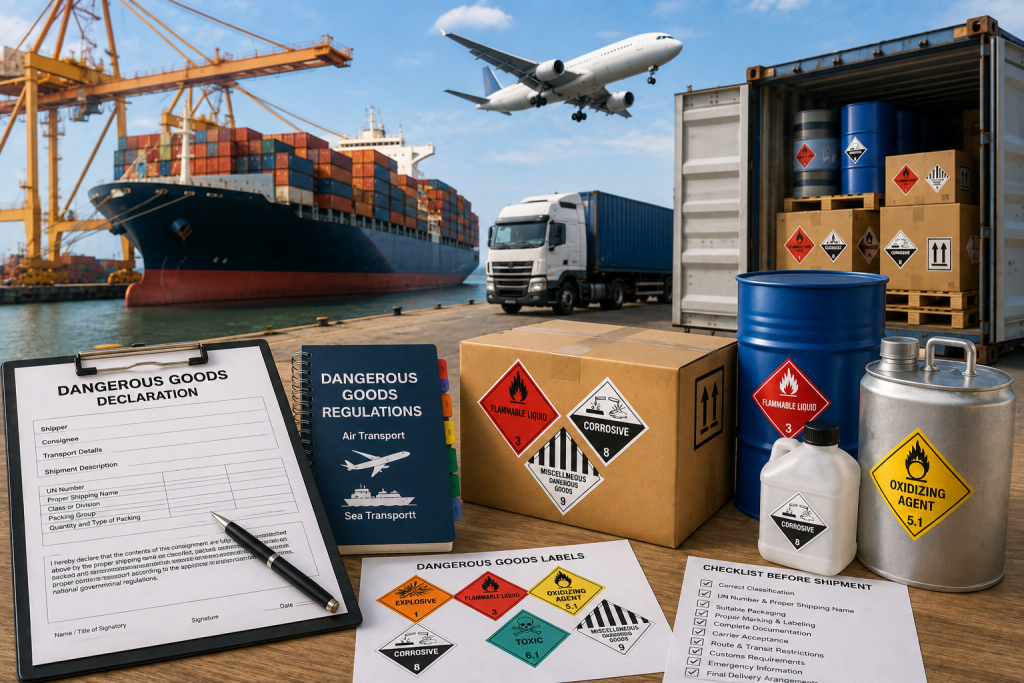
When goods move across borders, clear agreements about shipping responsibilities and risks are essential. International trade involves multiple parties, transportation stages, and customs procedures, which is why businesses rely on standardized Incoterms to define who is responsible for each step of the delivery process.
Two commonly used international shipping terms are CIP (Carriage and Insurance Paid To) and DDP (Delivered Duty Paid). At first glance they may appear similar because both involve the seller arranging transportation. However, the level of responsibility placed on the seller is very different.
Understanding CIP vs DDP Incoterms helps importers and exporters manage logistics costs, control shipping risks, and avoid confusion during customs clearance. Choosing the right term can significantly impact how smoothly a shipment moves from origin to destination.
What Are Incoterms?
Incoterms, short for International Commercial Terms, are standardized trade rules created by the International Chamber of Commerce (ICC). They define how responsibilities are divided between buyers and sellers in international shipping transactions.
These globally recognized rules help companies involved in international trade understand exactly who handles each part of the logistics process.
Incoterms define several key aspects of a shipment, including:
- who organizes transportation
- when the risk transfers from seller to buyer
- who handles export clearance and documentation
- who pays import duties and taxes
- whether insurance is required
The most recent version, Incoterms 2020, is currently used in global commerce. These rules help avoid misunderstandings and create consistency in international shipping agreements.
When comparing CIP vs DDP Incoterms, the biggest differences relate to risk transfer, customs responsibility, and insurance coverage.
What Is CIP (Carriage and Insurance Paid To)?
CIP (Carriage and Insurance Paid To) is an Incoterm where the seller arranges transportation and provides insurance coverage for the cargo until it reaches the agreed destination.
Under CIP Incoterms 2020, the seller is responsible for several key logistics tasks, including:
- completing export clearance and shipping documentation
- arranging international transportation
- paying freight costs to the named destination
- providing cargo insurance for the shipment
However, even though the seller pays for transportation and insurance, the transfer of risk occurs earlier in the shipping process.
The risk shifts from the seller to the buyer once the goods are handed over to the first carrier involved in the transport. From that point forward, the buyer becomes responsible for the cargo during the rest of the journey.
The buyer typically handles:
- import customs clearance in the destination country
- payment of import duties and taxes
- organizing final delivery if the shipment must travel beyond the named destination
For example, a manufacturer in Germany may ship industrial equipment to a buyer in Canada using CIP Toronto. The seller arranges transportation and insurance coverage to Toronto. However, once the goods are delivered to the first carrier, the shipping risk transfers to the buyer, who is then responsible for customs clearance and duty payments when the cargo arrives in Canada.
Because insurance is included and the seller manages the main transport, CIP is commonly used for multimodal shipments, where cargo may travel by truck, sea, and air before reaching its destination.
What Is DDP (Delivered Duty Paid)?
DDP (Delivered Duty Paid) places the maximum level of responsibility on the seller among all Incoterms.
Under DDP Incoterms 2020, the seller manages nearly every step of the shipping process, including:
- export clearance in the origin country
- international freight transportation
- import customs clearance in the destination country
- payment of import duties and taxes
- delivery of the goods to the buyer’s location
The buyer’s role is minimal. In most cases, the buyer only needs to receive the goods once they arrive.
For example, if a supplier in China ships electronics to a retailer in the United States under DDP Los Angeles, the seller handles all transportation, customs procedures, and duties until the goods arrive at the buyer’s warehouse.
Because the seller manages the entire logistics chain, DDP is often preferred in e-commerce and door-to-door delivery services.
Key Differences Between CIP and DDP Incoterms
Although both shipping terms involve the seller organizing transportation, their responsibilities differ significantly.
| Feature | CIP | DDP |
| Insurance | Seller must provide insurance | Insurance not required |
| Import duties | Buyer pays duties and taxes | Seller pays duties and taxes |
| Risk transfer | When goods are handed to the first carrier | When goods arrive at buyer’s location |
| Seller responsibility | Moderate | Maximum |
Under CIP vs DDP Incoterms, the main difference is the point of responsibility and customs obligations.
With CIP, the seller manages transportation but the buyer handles import procedures and becomes responsible for risk early in the shipment. With DDP, the seller assumes nearly all logistics responsibilities until final delivery.
CIP vs DDP: When to Use Each
Choosing between DDP vs CIP Incoterms depends on how the buyer and seller prefer to manage logistics and customs procedures.
When CIP Is a Better Option
CIP is often the preferred choice when the buyer wants more control over the import process. This shipping term is commonly used when:
- the buyer manages import procedures in their country
- the buyer has experience with local customs regulations
- the seller cannot easily manage destination duties and taxes
CIP allows the seller to handle transportation while the buyer retains control over customs clearance and local delivery.
When DDP Is a Better Option
DDP is useful when the buyer wants a simple, all-inclusive delivery process.
This Incoterm works well when:
- buyers prefer door-to-door shipping
- sellers have strong logistics partners in the destination country
- the buyer wants predictable costs with no additional customs steps
DDP is particularly common in international e-commerce shipments where the buyer expects goods to arrive without dealing with customs procedures.
Advantages and Disadvantages
Both CIP vs DDP Incoterms 2020 offer advantages depending on the logistics strategy of the buyer and seller.
Advantages of CIP
- Gives the buyer greater control over import customs procedures and duty payments.
- Allows companies with local customs expertise to manage clearance themselves.
Advantages of DDP
- Makes the delivery process very simple for the buyer.
- The seller manages transportation, customs, and duties until the goods arrive.
- Buyers know the total landed cost in advance, which helps with budgeting and pricing.
Potential Drawbacks
CIP can sometimes lead to misunderstandings if the buyer is not familiar with how risk transfer works. Under this term, the responsibility for the goods moves to the buyer once the shipment is handed to the first carrier. Because of this, buyers should confirm that the insurance coverage arranged by the seller is sufficient for the value of the cargo.
DDP can also create complications. The seller must be familiar with the import regulations, taxes, and customs procedures in the destination country. If these rules are not fully understood, shipments may face delays, unexpected costs, or compliance issues during customs clearance.
Need Help Choosing the Right Shipping Terms?
Selecting the right Incoterm is only one part of successful international shipping. To make sure your cargo moves smoothly from origin to destination, you also need reliable logistics support and proper customs handling.
RAM International Shipping provides complete logistics solutions to help businesses manage international shipments with confidence. Our team can assist with Air Freight, Ocean Freight, Customs Clearance, Warehousing & Distribution, and Transloading, ensuring your cargo is transported efficiently and in compliance with international regulations.
If you’re planning a shipment and need guidance on CIP vs DDP Incoterms or the best logistics strategy for your cargo, contact RAM International Shipping today. Our experts will help you choose the right shipping solution and manage the entire delivery process from start to finish.
Conclusion
Understanding the difference between CIP vs DDP Incoterms is important for companies involved in global shipping. Both terms require the seller to arrange transportation, but they distribute responsibilities between the buyer and seller in very different ways.
With CIP, the seller organizes freight and provides insurance coverage for the shipment, but the buyer is responsible for import procedures, duties, and taxes. The transfer of risk also happens early in the process—once the cargo is handed over to the first carrier.
In contrast, DDP places nearly all logistics responsibilities on the seller. The seller manages transportation, customs clearance, and import duties, ensuring that the shipment is delivered directly to the buyer’s destination with minimal involvement from the buyer.
The best choice depends on several factors, including:
- control over customs procedures
- logistics experience
- cost management
- risk preferences
Choosing the right international shipping terms can make global trade smoother and more predictable.
If you need help selecting the best Incoterms or arranging international freight, RAM International Shipping can assist with reliable logistics solutions and expert guidance for global cargo transportation.