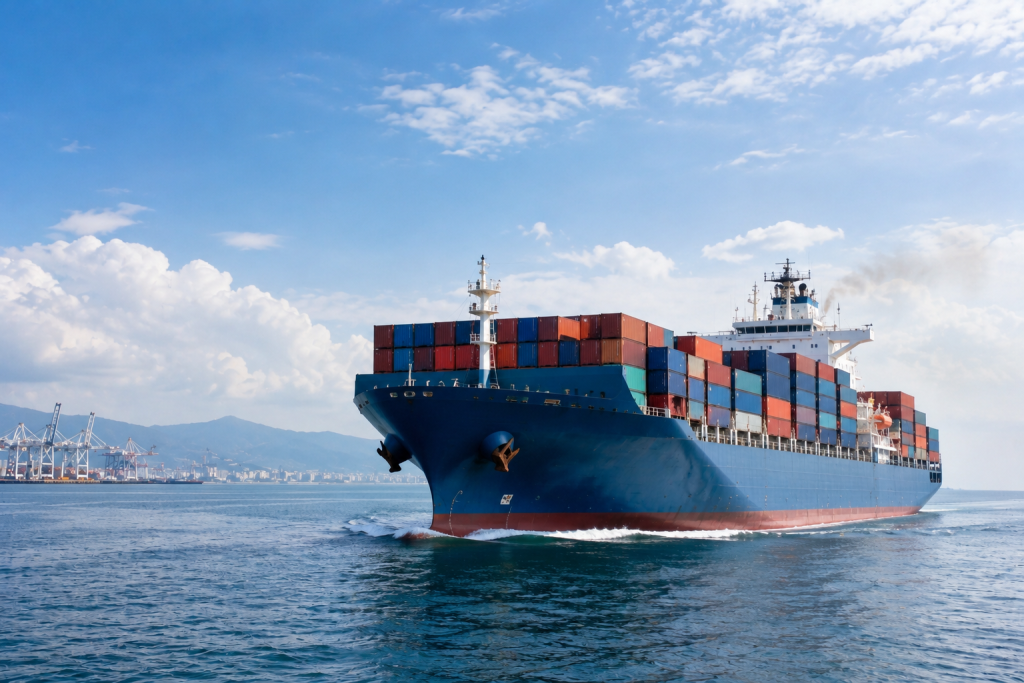
When planning an international ocean shipment, the route shown on a carrier schedule can look simple: one port at origin, another at destination, and a transit time between them. In practice, the container may travel directly on one vessel or pass through one or more intermediate ports before reaching its final destination.
This is the basic difference behind direct shipping vs. transshipment.
With a direct service, the container remains on the same vessel from the port of loading to the port of discharge. A transshipment service includes at least one vessel change at an intermediate port. That difference can affect transit time, shipping cost, sailing frequency, route availability, and the risk of delays.
There is one important point that is often misunderstood: “direct” does not necessarily mean the vessel makes no stops along the way. A direct vessel may call at several ports. What makes the service direct is that your container stays on that vessel instead of being transferred to another ship.
For shippers, the useful question is therefore not simply whether a route is direct. The better question is how each routing option fits the shipment’s deadline, destination, cargo requirements, and budget.
What Is Direct Shipping?
In ocean freight, direct shipping means the container is loaded onto a vessel at the origin port and remains on that same vessel until it reaches the destination port.
There is no transfer to another vessel during the ocean journey.
For example:
Port of New York → Port of Rotterdam
If the container leaves New York on Vessel A and arrives in Rotterdam on Vessel A, the service is direct.
The vessel may stop at another port during its rotation, but as long as the container is not discharged and transferred to another ship, the shipment is still considered a direct service. SeaRates specifically distinguishes this from transshipment based on vessel changes rather than the number of port calls.
Direct services are commonly attractive when shippers want fewer operational steps between origin and destination. Fewer transfers also remove the risk of missing a connecting vessel at a hub port.
The Cooperative Logistics Network and BRF Logistics both identify shorter transit, reduced intermediate handling, and more predictable routing as common benefits of direct shipping.
However, a direct route should not automatically be treated as the fastest or cheapest option. Sailing frequency and departure dates matter just as much as the number of vessel changes.
What Is Transshipment?
Transshipment means the container travels through an intermediate port where it is discharged from one vessel and loaded onto another vessel.
A simple route could look like this:
Origin Port → Transshipment Hub → Destination Port
For example:
Port A → Singapore → Port B
The container first travels to Singapore on one vessel. At the transshipment terminal, it is discharged and waits for its connecting service. It is then loaded onto another vessel for the next leg.
There may also be routes involving more than one transshipment point.
Transshipment is a normal part of international container shipping. Shipping lines cannot operate direct services between every possible pair of ports. Instead, many carrier networks use large hub ports connected to regional destinations by smaller feeder services.
This structure allows carriers to connect many more ports without sending a large ocean-going vessel directly between every origin and destination.
For the shipper, this means a destination without a direct vessel connection can still be served efficiently through a hub.
The trade-off is that another operational stage is added to the journey. The shipment now depends on the arrival of the first vessel, terminal operations at the hub, and the departure of the connecting vessel.
Direct Shipping vs. Transshipment: Key Differences
The basic difference is vessel transfer, but that single change affects several parts of the shipment.
| Factor | Direct Shipping | Transshipment |
|---|---|---|
| Vessel changes | None | One or more |
| Intermediate hub | Not required for transfer | Usually required |
| Transit time | Often shorter | Often longer, but not always |
| Connection risk | No connecting-vessel risk | Possible missed connection |
| Port coverage | More limited | Wider destination coverage |
| Sailing frequency | Can be limited | Often more options |
| Route flexibility | Lower | Higher |
| Cargo handling | Fewer vessel movements | Container transferred between vessels |
| Schedule planning | Usually simpler | More dependent on connections |
| Freight rate | Can be higher | Can be lower on some routes |
These are general patterns, not fixed rules. SeaRates notes that a transshipment route can sometimes arrive earlier if it has an earlier departure or better schedule than the available direct service. BRF Logistics similarly describes cost and port coverage as areas where transshipment may have an advantage.
That distinction matters. Comparing only “direct” against “transshipment” can hide the factors that actually determine when the cargo arrives.
Is Direct Shipping Always Faster?
Usually, a direct service has an advantage once the vessel has departed because there is no connection to wait for.
But the shortest ocean transit does not always produce the earliest final arrival.
Imagine two options:
Option A — Direct service
- Vessel departs in 8 days
- Ocean transit: 18 days
- Total from today: 26 days
Option B — Transshipment service
- Vessel departs tomorrow
- Ocean transit including connection: 22 days
- Total from today: 23 days
The transshipment route takes longer from port departure to port arrival, but the cargo still reaches the destination earlier because the shipment did not have to wait another week for the direct vessel.
This is why published transit time should be considered together with:
- next available departure;
- sailing frequency;
- schedule reliability;
- connection time;
- space availability;
- total origin-to-destination timing.
SeaRates specifically points out that a route with one vessel change may still arrive earlier when it offers an earlier departure or more reliable schedule.
For time-sensitive cargo, the actual expected arrival date is more useful than simply choosing the service labeled “direct.”
How Transshipment Works at a Hub Port
A transshipment port acts as a connection point between different vessel services.
A typical shipment follows several stages:
- The container is loaded on the first vessel at the origin port.
- The vessel travels to the transshipment hub.
- The container is discharged at the hub terminal.
- It waits for the connecting service.
- The container is loaded onto the next vessel.
- The connecting vessel carries it to the destination port.
Large shipping networks often use a hub-and-spoke structure. Major vessels connect large ports or regional hubs, while feeder vessels connect those hubs with smaller ports.
This is one reason transshipment provides far broader port coverage than relying only on direct routes.
The waiting period between vessels is one of the most important parts of the route. If the first vessel arrives late and the container misses its planned connection, it may need to wait for another sailing.
How serious that delay becomes depends partly on frequency. A hub with frequent onward services may provide another connection quickly. A less frequently served route can create a much longer wait.
Why Shipping Lines Use Transshipment
Operating a direct vessel between every port would be inefficient and, on many routes, commercially unrealistic.
Transshipment allows carriers to consolidate cargo from several locations at major hubs and then redistribute those containers across different services.
This gives shipping networks several practical advantages.
Wider Port Coverage
A smaller destination port may not generate enough cargo volume to support a direct long-distance service.
Instead, cargo can move on a mainline vessel to a regional hub and then continue on a feeder vessel.
That gives shippers access to destinations that would otherwise have limited international connectivity. The Cooperative Logistics Network highlights lack of a direct route as one of the primary reasons transshipment is used.
More Routing Options
Several hubs or carrier services may be available for the same destination.
If a direct service has limited capacity, a forwarder may be able to evaluate transshipment alternatives rather than waiting for space on the next direct vessel.
More Frequent Departures
A route with connections can sometimes have more departure options than a direct sailing.
This becomes particularly valuable when waiting seven days for the next direct vessel would eliminate the transit-time advantage of going direct.
Access to Smaller Markets
Hub-and-spoke networks connect major trade lanes with regional ports. This makes transshipment especially important for destinations outside the main east-west shipping corridors.
Advantages of Direct Shipping
Direct service has several practical benefits when the route is available and the schedule works for the shipment.
Fewer Connection Risks
The container does not depend on a connecting vessel at an intermediate port.
That removes one possible source of delay: the first vessel arriving too late for the scheduled connection.
For cargo tied to a production schedule, delivery appointment, or fixed project date, removing a vessel connection can make shipment planning easier.
Less Intermediate Handling
The container is not discharged specifically for transfer between two vessels at a hub.
Fewer container movements can reduce handling exposure. This is one reason direct services are often considered for high-value, fragile, sensitive, or production-critical shipments.
Simpler Tracking
A shipment traveling on one vessel is generally easier to follow.
With transshipment, tracking involves the first vessel, arrival at the hub, connection status, and departure of the second vessel.
More Predictable Routing
Direct services have fewer connection-related variables.
That does not mean they cannot be delayed. Weather, congestion, vessel schedule changes, and operational issues can affect direct routes as well. The difference is simply that there is one less connection stage where another delay can occur.
Advantages of Transshipment
Transshipment is sometimes described as the less attractive alternative to a direct service. That view is too simple.
On many trade lanes, it is a normal and practical routing option.
More Destinations
The biggest advantage is reach.
If there is no direct vessel from the origin to the required destination, transshipment can connect the shipment through a regional hub.
Greater Schedule Flexibility
More carrier combinations can mean more departure options.
A shipper may therefore avoid waiting for a less frequent direct service.
Better Space Availability on Some Routes
During periods of high demand, space on a popular direct service can become limited.
A routing through another hub may offer available vessel capacity sooner. Both SeaRates and BRF Logistics identify capacity and routing flexibility as factors worth considering when comparing services.
Potentially Lower Freight Rates
Transshipment can sometimes offer a lower ocean freight rate than a direct service.
The difference depends on the route, carrier, capacity, demand, and market conditions. It should therefore be checked against current quotations rather than treated as a permanent rule.
If cost is an important part of the routing decision, RAM International Shipping’s Freight Rate Calculator can be used to review shipment-specific freight options.
What Are the Risks of Transshipment?
The main disadvantages come from adding another connection to the journey.
Missed Connections
Suppose the first vessel is scheduled to arrive at the hub on Monday and the connecting vessel departs on Wednesday.
If congestion or weather delays the first vessel until Thursday, the planned connection can be missed.
The container must then wait for another vessel serving the destination.
This is one of the main reasons connection time and onward sailing frequency deserve attention before booking.
Port Congestion
A busy hub can create additional waiting time.
Even if the first vessel arrives on schedule, congestion can affect discharge, terminal operations, or the departure of the connecting vessel.
Additional Container Handling
The container has to be discharged from one vessel and loaded onto another.
That creates more operational steps than a direct service. The sources reviewed for this article consistently identify this additional transfer as one reason direct routing can reduce handling-related exposure.
More Tracking Points
With direct shipping, one of the main milestones is vessel arrival.
A transshipment shipment has more stages worth monitoring:
- departure from origin;
- arrival at the hub;
- discharge at the hub;
- connection status;
- loading onto the next vessel;
- departure from the hub;
- arrival at destination.
Confirmation that the container has been loaded onto its connecting vessel is particularly important. SeaRates notes that a missed connection can mean waiting until the next available sailing.
Direct Shipping May Make More Sense When…
A direct service deserves close consideration when reducing transit uncertainty is more important than finding the largest number of routing alternatives.
Examples include:
- cargo with a strict arrival deadline;
- production-critical components;
- high-value shipments;
- goods requiring careful handling;
- deliveries connected to fixed appointments;
- shipments where missing the planned arrival could create significant downstream costs.
A direct service may also be practical when both the origin and destination are major ports with regular direct connections.
Still, the sailing schedule needs to be checked. A direct service that leaves much later than an available transshipment service may not meet the shipment’s real deadline.
Transshipment May Make More Sense When…
A transshipment route becomes especially relevant when the destination has limited direct connectivity.
It can also work well when:
- delivery timing is relatively flexible;
- an earlier transshipment departure is available;
- direct vessel space is limited;
- the transshipment rate is more competitive;
- several carrier and hub options are available;
- the destination relies on feeder services;
- schedule flexibility matters more than having one vessel for the entire journey.
For general cargo without a strict delivery deadline, paying more solely to obtain a direct vessel may not always provide a meaningful operational benefit.
The route should be evaluated as a complete transportation plan rather than by service type alone.
Cost: Is Transshipment Cheaper Than Direct Shipping?
It can be, but there is no universal pricing rule.
Several of the reviewed sources describe transshipment as potentially more cost-effective on certain routes, while direct services may command higher rates because of demand, limited space, or shorter routing.
However, freight cost changes constantly.
A direct service can sometimes be competitively priced, while a connecting service can become expensive because of market demand or limited capacity on one of its legs.
The quoted ocean freight rate should also be considered against the business impact of transit time.
Saving money on freight may have limited value if a missed connection causes:
- production downtime;
- inventory shortages;
- missed customer deadlines;
- additional storage costs;
- changes to inland transportation bookings.
For critical cargo, the cheapest freight rate and the lowest total logistics cost are not always the same thing.
Direct vs. Transshipment for FCL and LCL Cargo
Both FCL and LCL shipments can move through transshipment routes. BRF Logistics specifically notes that transshipment is possible for both Full Container Load and Less than Container Load shipments.
With FCL, the container can travel through one or more hub ports before reaching its destination.
LCL routing can involve additional operational stages because consolidated cargo moves through the freight network together with shipments belonging to other customers.
For either service, the routing should be checked before booking rather than assuming the shipment will travel directly simply because the destination appears common.
The carrier schedule or freight forwarder can confirm whether the proposed ocean service is direct or includes one or more transshipment ports.
What Should You Compare Before Booking?
A useful route comparison goes beyond asking, “Is it direct?”
Review the following:
Total estimated delivery time. Include the time before departure and after arrival, not simply the advertised port-to-port transit.
Next available sailing. A fast vessel that does not leave for another week may be less useful than a slightly longer route departing tomorrow.
Sailing frequency. Frequent departures provide alternatives if the original booking changes.
Transshipment port. Know where the container will change vessels.
Connection time. A very short connection may provide less margin if the incoming vessel runs late.
Schedule reliability. Published transit time shows what is planned, not necessarily how consistently the service performs.
Space and equipment availability. A route has little value if suitable container equipment or vessel space cannot be confirmed.
Cargo requirements. High-value, sensitive, urgent, or production-critical goods may justify reducing intermediate movements.
Freight cost. Compare current rates rather than assuming either service will automatically be cheaper.
Alternative routing. A route with several available connections can provide useful options if disruption occurs.
A freight forwarder can compare these variables across available carrier services rather than treating the choice as simply direct versus indirect. RAM International Shipping organizes international freight transportation through carrier and logistics partners; its Ocean Freight Services cover routing and shipping options for international cargo.
Frequently Asked Questions
What is the main difference between direct shipping and transshipment?
With direct shipping, the container remains on the same vessel from origin to destination. With transshipment, the container is transferred to another vessel at an intermediate port.
Does a direct service mean the vessel makes no stops?
No. A direct vessel may call at other ports during its voyage. The service remains direct as long as your container stays on the same vessel until its destination.
Is direct shipping always faster than transshipment?
No. Direct services often have shorter vessel transit times, but the total journey can be longer if the next direct departure is several days away. A transshipment service with an earlier departure can sometimes arrive first.
Why would I use transshipment if a direct route exists?
A transshipment route may offer an earlier departure, more frequent sailings, better capacity, a lower current rate, or another routing option when the direct service is full.
Does transshipment increase the chance of delays?
It introduces an additional connection point, so there is a possibility that the container misses its onward vessel. Actual reliability depends on the hub, connection time, sailing frequency, carrier performance, and operating conditions.
Is transshipment normal in international shipping?
Yes. It is a standard part of global container networks and allows major shipping services to connect with smaller regional ports through hub-and-feeder systems.
Can both FCL and LCL cargo be transshipped?
Yes. Both FCL and LCL shipments can use routes involving one or more transshipment points.
Direct Shipping vs. Transshipment: What Matters Most
The practical difference is straightforward: direct shipping keeps the container on one vessel, while transshipment involves at least one vessel change.
What that means for a specific shipment is less straightforward.
Direct services reduce connection points and can provide simpler, more predictable routing. Transshipment expands port coverage, provides additional sailing options, and can sometimes offer better rates or an earlier overall arrival.
The route that works for one shipment may be a poor fit for another.
Before booking, compare the actual departure date, total transit, connection point, sailing frequency, schedule reliability, available capacity, freight rate, and consequences of a possible delay.
Those details tell you much more about the quality of a routing option than the word “direct” by itself.