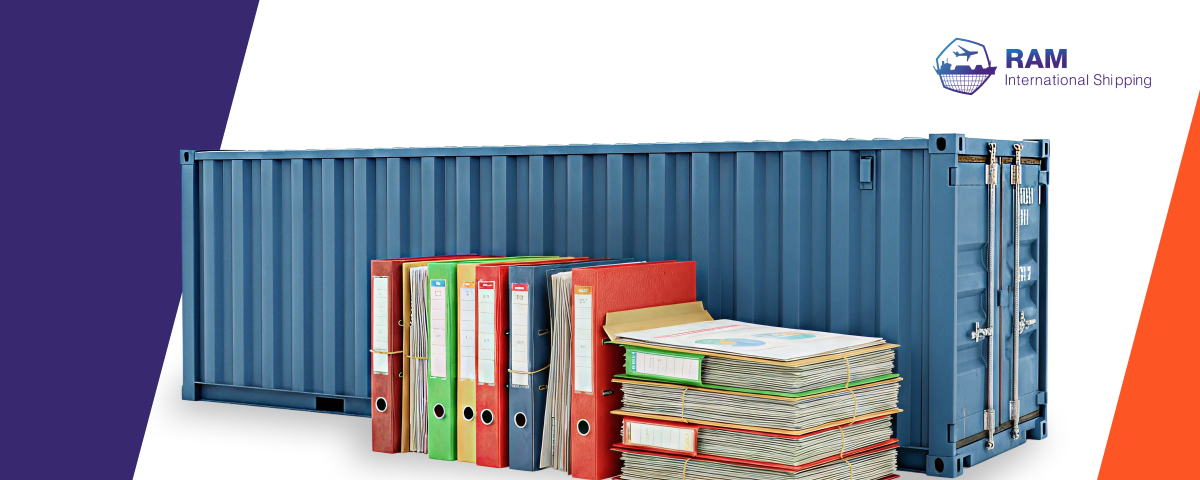
In international trade, proper shipping documentation is as important as the cargo itself. Missing or inaccurate paperwork can delay shipments, increase costs, or even lead to customs penalties.
Whether you are exporting your first container or managing large-scale logistics, knowing exactly which shipping documents are required — and why — will save time, money, and stress.
This guide from RAM Shipping provides a practical checklist of all key export and import documents, explains their purpose, and shows who is responsible for preparing each one.
Why shipping documents matter
Shipping documents are the foundation of smooth international trade. They serve several critical purposes:
- provide legal proof of shipment and ownership;
- help carriers, customs, and insurers identify the cargo;
- determine duties, taxes, and compliance requirements;
- facilitate communication between exporter, importer, and freight forwarder.
An accurate document set = faster clearance, fewer delays, and lower costs.
Essential shipping documents
Below is the list of the most common and necessary documents for most international shipments.
1. Commercial invoice
A commercial invoice is the primary document used for customs declaration. It details what’s being shipped, its value, and who’s buying or selling.
It must include:
- full contact details of the exporter and importer;
- description of goods, HS code, quantity, unit price, and total value;
- Incoterm, country of origin, and payment terms.
Prepared by: exporter
Used by: customs authorities, banks, and importers
2. Packing list
A packing list complements the invoice and describes how goods are packed. It helps with cargo inspection and weight verification.
It typically includes:
- number and type of packages;
- weights (gross and net);
- dimensions and marks;
- reference to the invoice or purchase order.
Prepared by: exporter
Used by: freight forwarder, customs, and consignee
3. Bill of lading (B/L) or air waybill (AWB)
The bill of lading is the most important transport document in sea freight. It serves three functions:
- a receipt of goods issued by the carrier;
- a document of title (ownership of cargo);
- a contract of carriage between shipper and carrier.
For air shipments, the equivalent is the air waybill (AWB) — non-negotiable and issued by the airline.
Prepared by: carrier or freight forwarder
Used by: exporter, importer, and bank (if LC payment)
4. Certificate of origin
A certificate of origin (COO) confirms where the goods were manufactured. Customs use it to determine eligibility for preferential tariffs or trade agreements.
It may be:
- a chamber-issued certificate (e.g., Form A, EUR.1);
- or a self-declaration in some free trade zones.
Prepared by: exporter or local chamber of commerce
Used by: customs and importer
5. Export declaration
The export declaration (often filed electronically) provides details about the goods being exported from the origin country.
It ensures compliance with export control regulations and trade statistics.
Prepared by: exporter or customs broker
Used by: origin customs authorities
6. Import declaration
Filed at the destination port, the import declaration gives details about the imported goods, value, and tariff classification.
It’s required for customs clearance and calculation of duties and taxes.
Prepared by: importer or customs broker
Used by: destination customs authorities
7. Insurance certificate
If your shipment is insured, an insurance certificate proves that coverage exists in case of loss or damage.
It should mention:
- insured value (usually 110% of CIF value);
- policy number and insurer contact;
- route, vessel, and cargo details.
Prepared by: insurance company or broker
Used by: importer and bank (for LC)
8. Letter of credit (LC) and bank documents
In transactions using a letter of credit, all commercial and transport documents must exactly match the LC terms. Any discrepancy can delay payment.
Ensure consistency in:
- consignee name;
- cargo description;
- dates and signatures.
Prepared by: issuing and advising banks
Used by: exporter, importer, bank, customs
9. Proforma invoice
A proforma invoice is a preliminary bill sent before shipping. It allows the buyer to arrange payment or import licenses in advance.
Prepared by: exporter
Used by: importer, bank
10. Inspection or phytosanitary certificate (if applicable)
Some goods — such as food, plants, or machinery — require inspection or phytosanitary certificates to confirm safety and compliance.
Prepared by: authorized inspection agency
Used by: customs, importer
Recommended shipping documents checklist
| Document | Who Prepares | Purpose |
| Commercial invoice | Exporter | Customs valuation and proof of sale |
| Packing list | Exporter | Weight, dimensions, packaging details |
| Bill of lading / AWB | Carrier / Forwarder | Transport receipt and title of goods |
| Certificate of origin | Exporter / Chamber | Proof of manufacturing country |
| Export declaration | Exporter / Broker | Regulatory compliance |
| Import declaration | Importer / Broker | Customs clearance and duties |
| Insurance certificate | Insurer | Risk protection |
| Letter of credit | Bank | Payment security |
| Inspection certificate | Authority | Safety / quality assurance |
Optional but useful documents
Depending on the trade route or cargo, additional documents may be required:
- Dangerous Goods Declaration (DGD) for hazardous materials;
- Fumigation certificate for wooden packaging;
- Weight certificate (VGM) for ocean containers;
- Consular invoice for specific countries (e.g., Middle East, Africa);
- ATA Carnet for temporary exports (trade shows, exhibitions).
Tips for managing shipping documents
- Keep all originals and digital copies — many customs offices now accept scanned documents.
- Check consistency — details like HS codes, weights, and consignee names must match across all forms.
- Verify Incoterms — they affect who prepares and pays for documentation.
- Use a freight forwarder like RAM Shipping to review and manage your paperwork.
- Store documents for at least 5 years for audit and compliance purposes.
Proper documentation is the backbone of every successful international shipment.
By following this shipping documents checklist, exporters and importers can ensure smooth customs clearance, avoid costly delays, and build a reputation for reliability.
Frequently asked questions
- What are the most important documents for export shipments?
The essential ones are the commercial invoice, packing list, and bill of lading — these are required for almost every international shipment.
- Who issues the bill of lading?
It is issued by the carrier or freight forwarder once the cargo is loaded on board.
- Is a certificate of origin always required?
Not always, but it’s recommended when shipping under preferential trade agreements or to countries with specific origin requirements.
- Can I send scanned copies instead of originals?
Many carriers and customs offices accept digital copies, but banks under a letter of credit still require original signed documents.
- How can RAM Shipping help with export paperwork?
RAM Shipping prepares and verifies all shipping documents for you, ensuring compliance and fast customs clearance.