One of the most common questions in logistics is how long international shipping actually takes. The answer depends on several factors, including the shipping method, distance, route, and customs processes. While there is no single fixed timeline, understanding how shipping works can help you estimate delivery times more accurately.
Average shipping times by method
The shipping method is the biggest factor affecting delivery time.
Air freight is the fastest option. In most cases, international shipments by air take between 3 to 10 days, depending on the destination and airline schedules. This method is ideal for urgent or high-value goods.
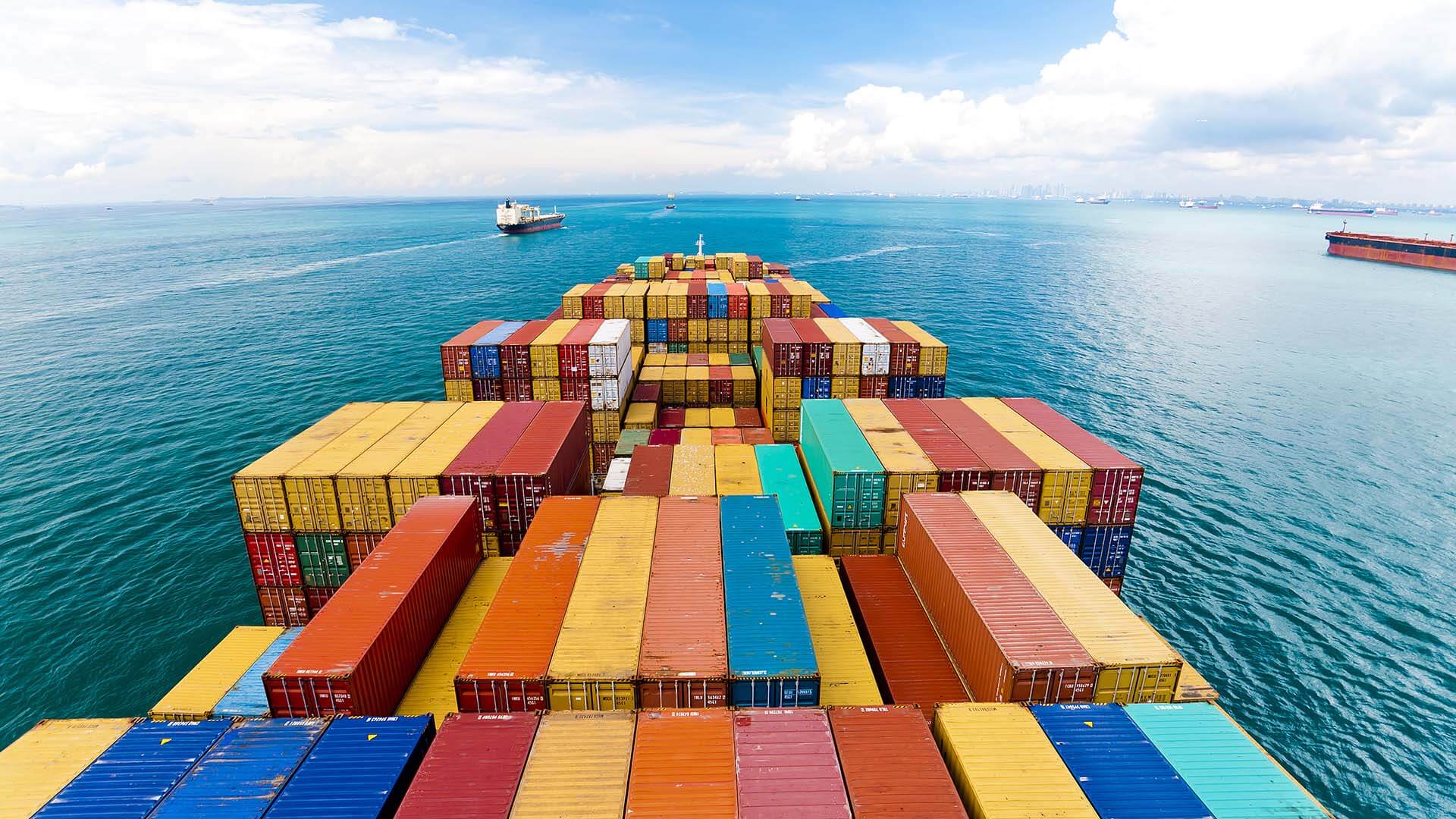
Ocean freight is significantly slower but more cost-effective. Shipping by sea typically takes between 2 to 8 weeks. The exact timing depends on the route, port congestion, and whether the shipment is direct or involves transshipment.
Land transportation is usually used for regional deliveries. Transit times vary depending on distance and infrastructure but are generally faster than sea freight for nearby countries.
Factors that affect shipping time
Several factors can influence how long your shipment will take.
Distance and route play a major role. Longer distances and indirect routes increase transit time, especially if the cargo passes through multiple ports.
Port congestion can cause unexpected delays. Busy ports often experience backlogs, which can slow down loading and unloading processes.
Weather conditions also impact shipping schedules. Storms, heavy winds, or other extreme conditions can delay both sea and air transport.
Customs clearance is another key factor. If documents are incomplete or inspections are required, shipments may be held for several days or longer.
Transit time vs total delivery time
It’s important to understand the difference between transit time and total delivery time.
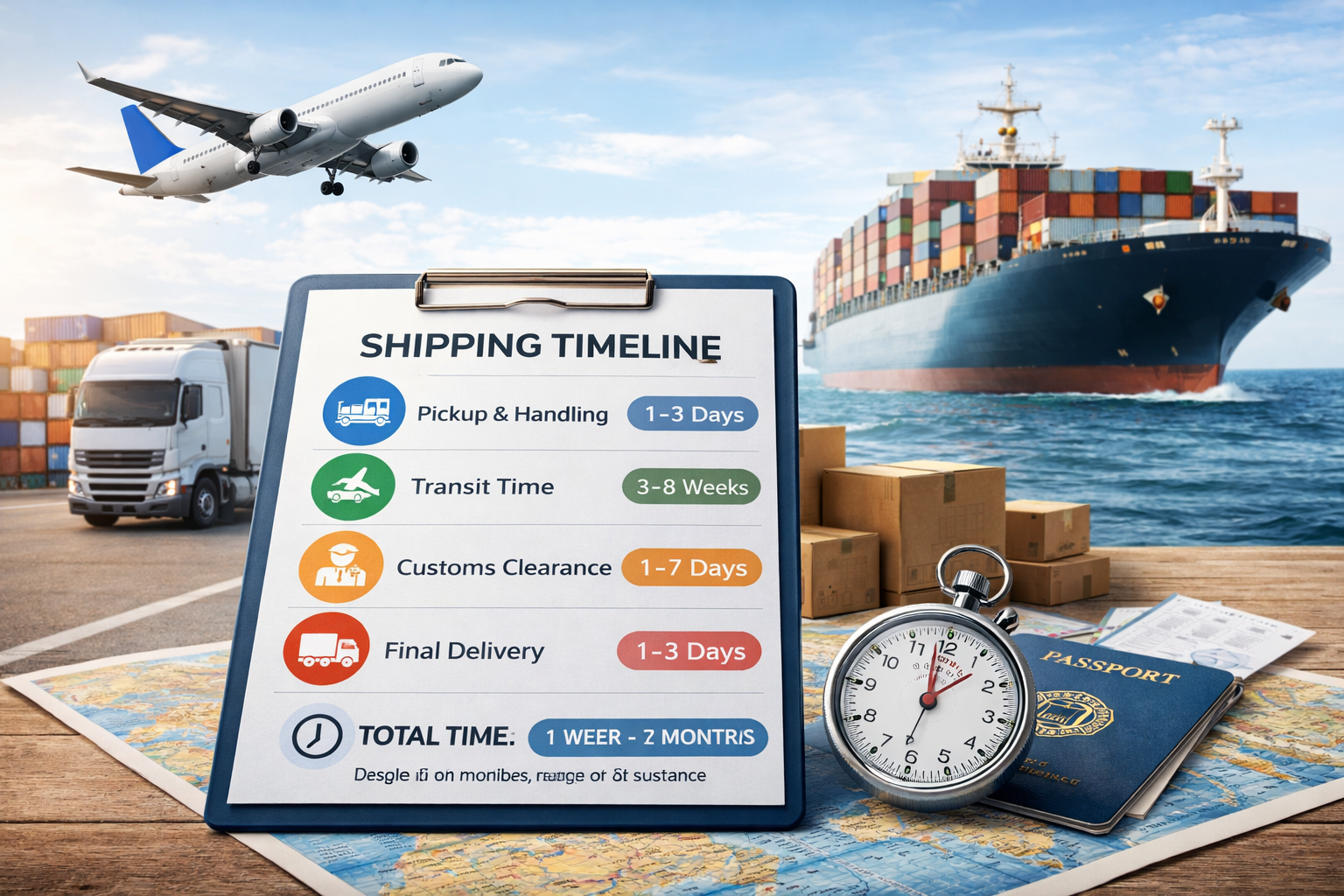
Transit time refers to the time your cargo is actually in motion — for example, on a ship or plane. Total delivery time includes additional stages such as pickup, port handling, customs clearance, and final delivery.
Many first-time shippers focus only on transit time and underestimate how long the full process takes.
Typical timelines for popular routes
Shipping times vary depending on the origin and destination.
From the USA to Europe, ocean freight usually takes around 2 to 4 weeks, while air freight takes about 5 to 10 days.
From the USA to Africa, shipping can take between 4 to 8 weeks by sea, depending on the specific country and port.
From the USA to the Middle East, ocean shipping typically takes 3 to 6 weeks.
These are general estimates and can vary based on conditions at the time of shipment.
How to speed up international shipping
While some factors are outside your control, there are ways to reduce delays.
Choosing the right shipping method is the most effective way to control delivery time. If speed is critical, air freight is the best option.
Preparing accurate documentation helps avoid customs delays. Even small errors can result in significant hold-ups.
Working with a reliable logistics company ensures better planning, route optimization, and faster issue resolution.
Common reasons for delays
Delays can happen even with careful planning. Some of the most common reasons include incomplete paperwork, customs inspections, port congestion, and unexpected disruptions such as strikes or global events.
Understanding these risks allows you to plan ahead and minimize their impact.
Why timing matters in shipping
Delivery time is not just about convenience — it directly affects costs, customer satisfaction, and business operations.
Late shipments can lead to additional fees, missed deadlines, or lost opportunities. That’s why accurate planning and realistic expectations are essential.
Final thoughts
International shipping times can vary widely depending on the method, route, and external factors. While air freight offers speed, ocean freight provides cost efficiency.
By understanding the full process and planning ahead, you can better estimate delivery timelines and avoid unnecessary delays. Working with experienced logistics professionals also helps ensure your shipment arrives as quickly and smoothly as possible.