Transporting dangerous goods (DG) — such as chemicals, batteries, or flammable materials — requires precision, compliance, and expertise. Even a small mistake can lead to cargo damage, fines, or environmental risks.
To move these products safely and legally across borders, businesses must follow strict international regulations, proper documentation, and packaging standards.
This guide from RAM Shipping outlines the best practices for shipping dangerous goods internationally — so your cargo stays compliant, safe, and on schedule.
What are dangerous goods
Dangerous goods (also called hazardous materials) are substances that pose risks to health, safety, property, or the environment during transportation.
They are classified under international frameworks such as:
- UN Model Regulations — global classification system;
- IMDG Code — for sea freight;
- IATA DGR — for air freight;
- ADR/RID — for road and rail transport in Europe.
Examples include:
- flammable liquids (paints, fuels, alcohols);
- compressed gases (propane, oxygen);
- corrosive materials (acids, cleaning agents);
- lithium batteries and power banks;
- explosives, pesticides, and toxic substances.
Why compliance is critical
Shipping dangerous goods without proper compliance can lead to:
- fines and shipment confiscation by customs or carriers;
- cargo rejection at terminals;
- environmental damage or injury;
- loss of insurance coverage if regulations are violated.
Non-compliance costs more than following the rules — both financially and reputationally.
Classification and labeling of dangerous goods
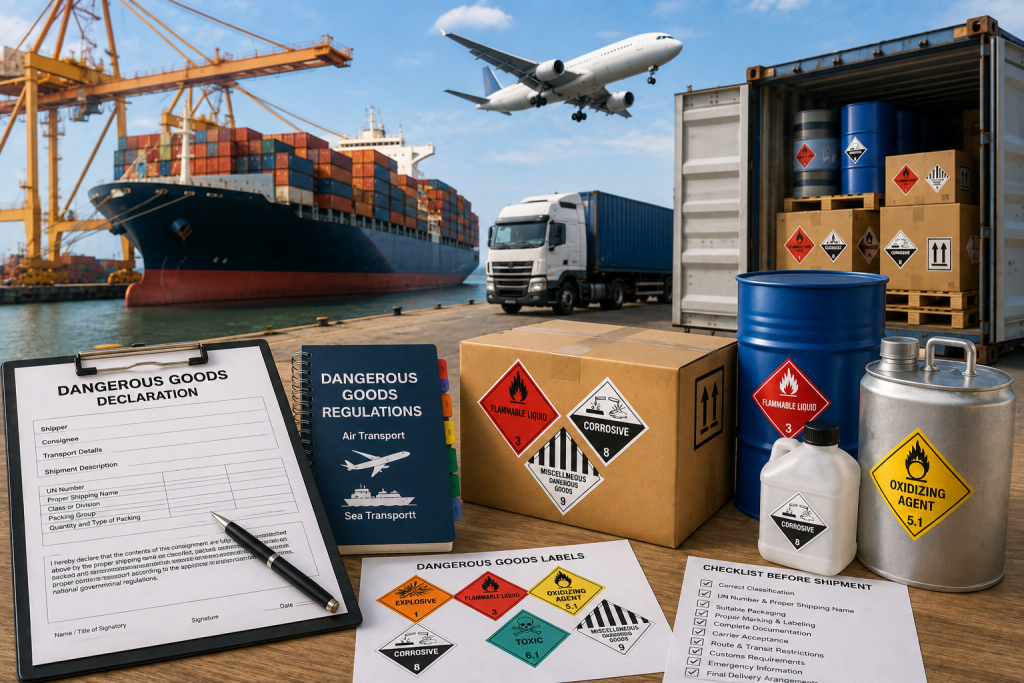
The first and most important step is correct classification according to the UN hazard classes. Each product must have a UN number, proper shipping name, and packing group.
| Class | Type of Hazard | Example |
| 1 | Explosives | Fireworks, ammunition |
| 2 | Gases | Propane, aerosols |
| 3 | Flammable liquids | Paints, alcohol |
| 4 | Flammable solids | Matches, sulfur |
| 5 | Oxidizing substances | Hydrogen peroxide |
| 6 | Toxic and infectious substances | Pesticides, medical waste |
| 7 | Radioactive materials | Medical isotopes |
| 8 | Corrosive substances | Acids, alkalis |
| 9 | Miscellaneous dangerous goods | Lithium batteries, dry ice |
Each package must display the correct hazard label, UN number, and handling instructions. Labels must be durable, visible, and follow IATA/IMDG color standards.
Packaging and container selection
Proper packaging minimizes the risk of leaks, spills, or reactions. International regulations specify performance-tested packaging marked with a UN approval code (e.g., UN 4G/Y30/S/22).
Best practices include:
- use UN-certified containers suitable for the substance type;
- avoid reusing packaging unless reconditioned;
- ensure inner and outer packaging compatibility;
- fill packages to 90–95% capacity to allow pressure changes;
- use absorbent materials for liquids.
For sea freight, ensure containers are IMDG-compliant and that dangerous goods are properly segregated (for example, flammable liquids away from oxidizers).
Documentation requirements
Incorrect paperwork is one of the main causes of DG shipment delays. The essential documents include:
- Dangerous Goods Declaration (DGD) — confirms compliance with IMDG or IATA rules.
- Safety Data Sheet (SDS) — provides chemical and handling information.
- Packing List and Commercial Invoice — with clear DG identification.
- Container/Vehicle Packing Certificate (CPC) — for sea freight.
- Bill of Lading or Air Waybill — marked as “Dangerous Goods” shipment.
RAM Shipping recommends always verifying the latest version of each form, as small regulatory updates can affect acceptance by carriers.
Training and certification
Only trained and certified personnel are allowed to handle, pack, and declare dangerous goods. Training must be renewed every two years (per IATA and IMDG requirements).
Training covers:
- hazard classification and labeling;
- packaging standards and segregation;
- emergency response procedures;
- documentation and declaration process.
If your team lacks certification, your freight forwarder — like RAM Shipping — can manage DG compliance on your behalf.
Segregation and storage rules
When shipping multiple types of dangerous goods, proper segregation is crucial to prevent chemical reactions.
For example:
- acids must not be stored near alkalis;
- flammable materials should be kept away from oxidizers;
- food products must not share containers with toxic chemicals.
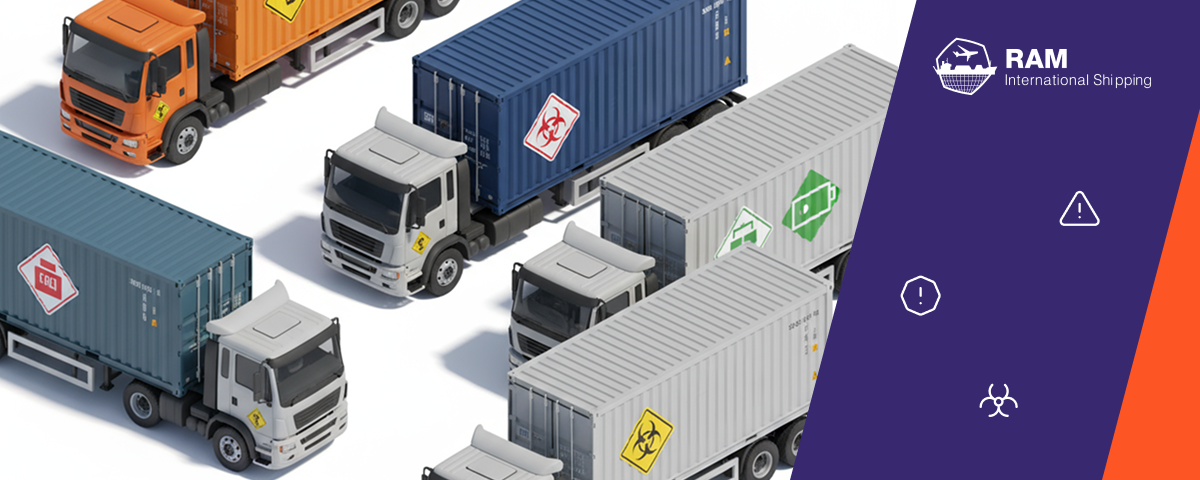
Use container placards to indicate hazard classes and keep accurate stowage plans for customs and port authorities.
Emergency procedures and insurance
Even with perfect preparation, accidents can happen. A solid emergency plan ensures minimal damage and faster recovery.
Checklist for DG emergencies:
- have Material Safety Data Sheets (MSDS) on hand;
- label emergency contacts and response numbers on packaging;
- use carriers with DG-handling experience;
- purchase DG-specific cargo insurance covering contamination or cleanup costs.
Comprehensive insurance protects not only the cargo but your business continuity.
How RAM Shipping ensures compliance and safety
RAM Shipping specializes in international transport of dangerous goods across air, sea, and land routes.
Our DG-certified experts handle:
- full classification and documentation;
- packaging and labeling checks;
- coordination with certified carriers and terminals;
- 24/7 monitoring of DG shipments.
With RAM Shipping, your dangerous goods travel safely, legally, and efficiently — every time.
Shipping dangerous goods internationally demands responsibility, precision, and regulatory knowledge. The right preparation, packaging, and documentation not only keep your cargo safe but also protect your company from costly compliance issues.
Frequently asked questions
- What counts as dangerous goods?
Any substance that can pose a health, safety, or environmental risk during transportation — from chemicals and gases to lithium batteries.
- Can I ship dangerous goods by air?
Yes, but only under IATA DGR regulations. Some substances may be restricted or require special packaging.
- Who fills out the Dangerous Goods Declaration?
A trained and certified shipper or freight forwarder must complete and sign the declaration.
- What happens if DG cargo is mislabeled?
It may be rejected by the carrier, delayed at customs, or result in fines. Repeated offenses can lead to blacklisting.
- How can RAM Shipping help?
We manage classification, labeling, documentation, and carrier coordination — ensuring your DG shipments fully comply with IMDG, IATA, and ADR rules.